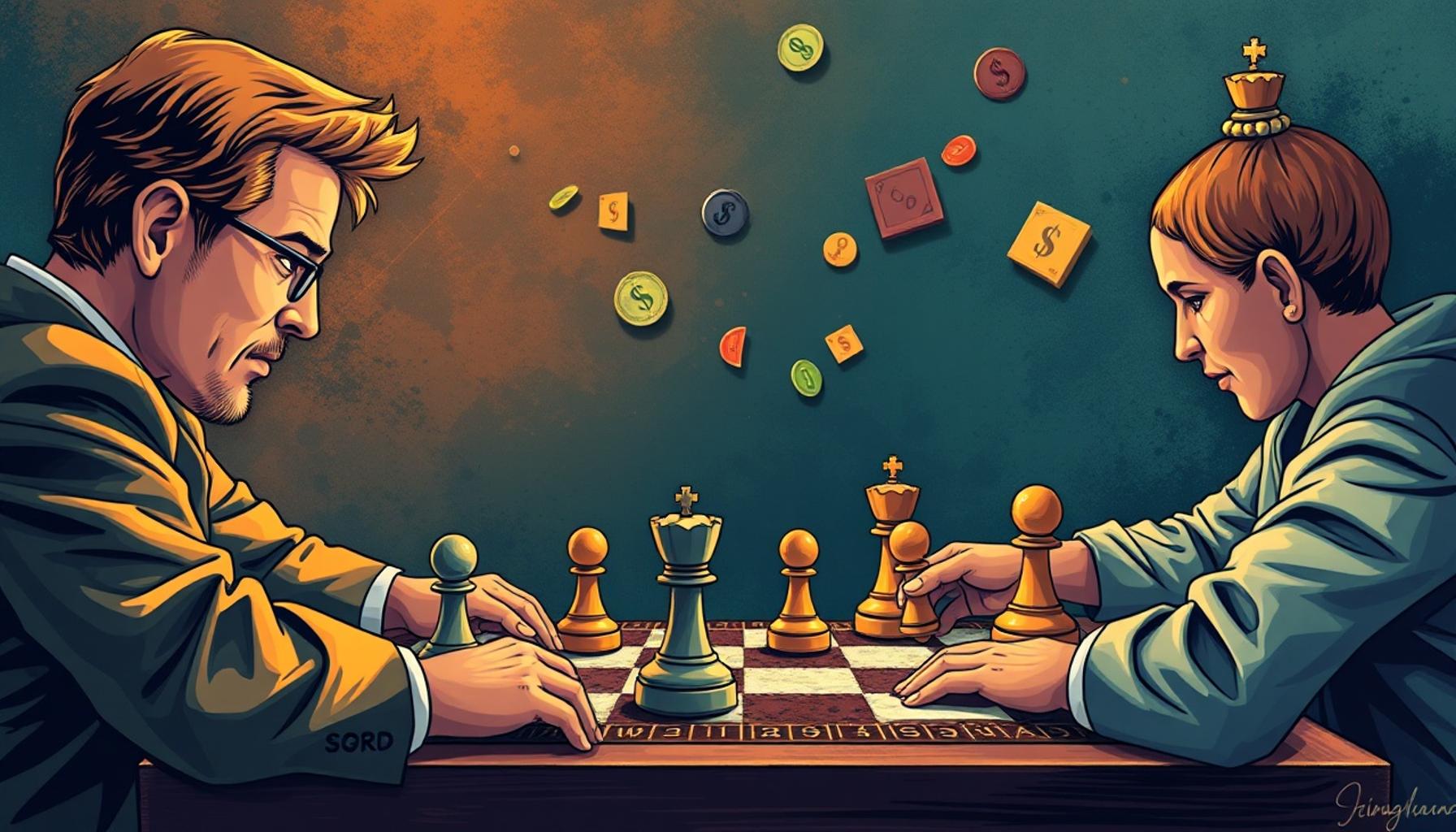
Unraveling the Game of Go: Long-Term Thinking Strategies and Move Anticipation

Unpacking the Complexity of Go: A Journey into Strategy and Thought
The game of Go, often regarded as the pinnacle of strategic board games, captivates players with its mystical blend of simplicity and complexity. Originating over 2,500 years ago in China, Go has since transcended cultural boundaries, enchanting millions across the globe. The rules may appear straightforward, but the depth of gameplay requires players to navigate a labyrinth of options, where each move can be pivotal in achieving victory. Delving into Go offers insights into essential cognitive skills, making it not just a game but a life lesson in strategic thinking and decision-making.
At the heart of Go lies a profound emphasis on several key concepts:
- Long-Term Strategy: Unlike many games that reward immediate gains, Go players must prioritize broader, overarching objectives. This requires a mindset that foresees the implications of moves several plays ahead. For example, players might sacrifice a small group of stones to secure larger territories, illustrating an understanding that short-term losses can lead to substantial victories.
- Move Anticipation: Success in Go hinges on predicting the opponent’s responses. Skilled players often engage in a psychological battle of wits, contemplating not only their next move but also how their opponent will react. This anticipation can provide a significant tactical advantage, as players can manipulate the board in their favor by forcing opponents into less favorable positions.
- Territorial Control: Mastery of Go requires a keen understanding of balancing risks versus rewards across the board. Players must make calculated decisions about where to expand their territory while simultaneously defending against opponent encroachments. This delicate balance mirrors real-world scenarios where strategic territorial acquisition, such as in urban planning or resource management, is vital for success.
Engaging with the game further cultivates a suite of cognitive skills that extend far beyond the confines of the board:
- Critical Thinking: Players enhance their ability to make informed decisions based on an array of potential outcomes. This analytical prowess is invaluable, not just in Go but in everyday problem-solving, whether at work or in personal relationships.
- Adaptability: The ever-evolving nature of the game requires players to be flexible, adjusting their strategies in response to unexpected moves from their opponents. This skill translates seamlessly to life’s unpredictability, equipping individuals to handle shifting circumstances with grace.
- Patience: The art of Go teaches players to value perseverance. In a society driven by instant gratification, the ability to focus on long-term goals can lead to more meaningful achievements, whether in academics, careers, or personal development.
The exploration of Go reveals that the game is a microcosm of life itself, encouraging participants to adopt a more strategic perspective in their daily challenges. As players immerse themselves in the intricate web of possibility, they discover not just a pastime but a profound journey toward self-improvement and intellectual enrichment.
For those looking to dive deeper into the world of Go, resources abound, including online platforms, local clubs, and engaging literature that unlocks the secrets of this ancient strategy game. It invites everyone, from beginners to masters, to explore a complex journey that encapsulates the art of strategic thinking, patience, and life itself.
DISCOVER MORE: Click here to learn how to enhance teamwork
Strategic Mindsets: Embracing Long-Term Thinking in Go
The essence of Go lies in its demand for long-term thinking—a quality that transcends the confines of the game and spills into various aspects of life. Unlike many popular games where instant rewards can quickly sway the course of play, Go challenges players to engage in a deeper level of foresight. Each move is not just a response to the current layout of the board but a calculated step towards achieving larger goals. This strategic foresight is akin to long-term planning in real life, such as career trajectories or financial investments, where patience and planning yield greater rewards than rushing towards immediate gain.
Every seasoned Go player knows that a victory often rests on the ability to anticipate moves several steps ahead. In this regard, players routinely evaluate the potential outcomes of their actions, both for themselves and their opponents. Understanding the concept of move anticipation is crucial, as it allows players to position themselves advantageously while simultaneously predicting the responses of their opponents. This psychological aspect of Go creates a dynamic tension on the board; players must be aware not only of how their actions could impact their game but also of how their strategic choices may provoke counteractions. Some players might focus on defensive strategies, reinforcing their established territories, while others might opt for aggressive territorial expansion.
- Anticipating Moves: Skilled players hone their ability to foresee the intentions behind their opponent’s moves. This can involve recognizing patterns in the opponent’s play style or strategically placing stones to exert pressure.
- Delayed Gratification: Unlike chess, where quick tactical gains often lead to victory, Go emphasizes the importance of sacrifice and the greater value of long-term strategies. Players frequently must choose to give up minor advantages in service of larger plans.
- Multi-layered Strategies: The vast number of potential moves in Go forces players to consider various scenarios. A seemingly insignificant play can have cascading effects, influencing large areas of the board and shifting the entire game’s dynamics.
Such fundamental principles of long-term strategy and move anticipation mirror many challenges and scenarios faced in daily life. In a world increasingly defined by digital distractions and rapid changes, the ability to maintain focus on future outcomes becomes invaluable. Think about professionals navigating corporate environments or individuals managing personal relationships; the lessons derived from Go can prove transformative. By prioritizing long-term objectives over short-term gratification, players cultivate skills essential for leadership and effective decision-making.
Delving deeper into the hypotheses and methods employed in high-level Go play reveals intricate thought processes that any player can learn. Analyzing professional games, reading strategic literature, or joining communities where enthusiasts gather can all enhance one’s understanding of the game’s complexities. With patience and practice, players can cultivate not only their strategic acumen but also a mindset that prioritizes thoughtful, deliberate action—a trait that ultimately enriches both their gameplay and their lives.
Long-Term Thinking in Go
The essence of the game of Go extends far beyond simply placing black and white stones on a board; it embodies a profound strategic philosophy that rewards players who can visualize the future. In Go, every move significantly influences the unfolding dynamics of the game, highlighting the importance of long-term thinking strategies. Players are often encouraged to think several moves ahead and anticipate how their positioning will affect board presence and territory over time.
This necessitates a keen ability to evaluate both immediate gains and potential future developments. A well-placed stone can preemptively mitigate an opponent’s strategies, demonstrating the critical role of effectively reading the board. As players build their strategies, they do not merely react; instead, they cultivate foresight that guides each decision.
Move Anticipation: A Key Element
Moreover, move anticipation stands as a cornerstone of competency in Go. Players must be adept at predicting not only their opponent’s next moves but also the subsequent implications of those moves. Engaging in such anticipatory thinking requires both analytical skills and an intuitive understanding of the game’s flow. Our exploration into the nuances of move anticipation reveals how expert players subtly manipulate their opponent’s choices through calculated risks.
In essence, Go reinforces the value of patience, highlighting that a single stone can reverberate through the game in unexpected ways, potentially leading to victory or defeat. For those looking to deepen their engagement with Go, embracing these strategies can illuminate the intriguing layers that define this ancient game.
| Strategy Category | Insights |
|---|---|
| Long-Term Investment in Positioning | Fosters a robust framework for offensive and defensive maneuvers. |
| Anticipation of Opponent’s Moves | Enhances the ability to counter threats before they materialize. |
As you delve deeper into the art of Go, these strategic layers and anticipatory skills are vital to mastering not only the game but also the underlying principles of strategic foresight applicable in various life scenarios.
DISCOVER MORE: Click here to enhance your understanding
Building a Foundation: Key Strategies in Long-Term Go Play
Understanding the intricate layers of strategy in Go is central to mastering the game, especially when it comes to long-term planning and move anticipation. High-level players display a remarkable ability to analyze the board and assess both immediate threats and future opportunities. This ability is fundamentally rooted in a myriad of tactics that can fundamentally alter the game’s trajectory over time. Here, we examine core strategies that illuminate the path to both success in Go and insights into effective strategic planning in life.
The Importance of Control
One of the most critical components of Go is the concept of board control. The players who grasp the importance of controlling key areas often dictate the flow of the game. Gaining territory early can set the stage for future success, laying a firm foundation that supports later moves. However, this is far from a simple quest; players must decide when to expand their territory and when to defend it. Balancing offense and defense involves constantly predicting an opponent’s moves and evaluating how current decisions will impact future board dynamics.
Reading Your Opponent
In Go, a thorough understanding of opponents’ strategies is vital. Skilled players develop a keen intuition for reading their opponents—this means discerning not only what their current moves imply but also what they anticipate doing next. This is achieved through repeated exposure to various styles of play and recognizing typical responses to common scenarios. The ability to discern patterns allows players to exploit weaknesses while also preparing countermeasures against potential threats. Shifts in strategy can often be predicted, and thus players become more adept at navigating complex game scenarios.
- Influence versus Territory: Players must decide when to prioritize immediate territory versus long-term influence. Gaining territory is often essential, but building influence can allow for more dynamic plays in the latter stages of the game.
- Trade-offs and Exchanges: Go often requires players to make sacrifices. Understanding when to trade a group of stones for a strategic advantage later is crucial. This mentality can pivot games from short-term losses to significant long-term wins.
- Flexibility in Strategy: Technology has advanced the way players train, with software enabling the analysis of numerous game scenarios. This has led to enhanced adaptability, as players continually refine their strategies based on pattern recognition and historical game data.
Applying Go Concepts to Broader Contexts
The lessons drawn from Go extend beyond the board and into varied life scenarios—from business negotiations to personal relationships. Understanding when to take the initiative and when to retreat is a skill developed through years of practice in Go, often manifested through patience and observation in real-world situations. Moreover, fostering a mindset that embraces uncertainty and calculates risk helps individuals excel in ever-changing environments. The qualities of concentration, analytical thinking, and resilience, sharpened through Go, are often echoed in fields such as entrepreneurship and personal development.
In summary, Go is a game of profound depths where the true strategy unfolds only through careful deliberation, thorough understanding of one’s opponent, and a willingness to adapt over time. Through the lens of Go, players can develop rich, nuanced tactical frameworks that not only lead to victories on the board but also equip them with valuable principles applicable throughout their personal and professional lives.
DIVE DEEPER: Click here to enhance your cognitive agility
Conclusion: The Strategic Dimensions of Go and Life
In the intricate world of Go, the interplay between long-term thinking and move anticipation emerges as a compelling foundation for success, both on the board and in broader life applications. Players who delve into the depths of this ancient game garner not only tactical prowess but also a reflective mindset that transcends the game itself. The subtle art of board control, the delicate balance between immediate gains and strategic sacrifices, and the keen ability to read opponents are invaluable skills that resonate well beyond the confines of gameplay.
For those looking to adopt Go’s principles in daily life, the key lies in understanding that effective decision-making often involves anticipating future circumstances while weighing both immediate and long-lasting consequences. This perspective can revolutionize approaches in various fields, such as business, personal relationships, and even policy-making, where foresight and adaptability are crucial. By embracing the discipline of careful planning and honed intuition, individuals can navigate complexities with greater confidence and resilience.
As curiosity about this timeless game grows, the insights derived from Go continue to inspire strategic thinkers and innovators alike. The challenge now is to explore further how the enchanting strategies of Go can inform and enhance our own narrative, fostering a culture of long-term vision, patience, and calculated risk-taking in our daily endeavors. Ultimately, unraveling the game of Go is more than just a journey through a board—it’s an odyssey into the human experience and a testament to the power of foresight in shaping our futures.
Related posts:
Developing Problem-Solving Skills Through Mathematical Puzzles
Escape Rooms: How Group Challenges Foster Strategic Thinking and Collaboration
Modern Board Games: Learning Strategic Thinking through Collective Experiences
Unraveling Sudoku: Mental Strategies to Enhance Cognitive Agility
Strategic Reasoning in Simulation Games: Learning from Virtual Scenarios
Competitive Card Games: How Strategic Thinking Can Define Winners

Linda Carter is a writer and puzzle expert specializing in mind games, brain teasers, and cognitive challenges. With extensive experience helping individuals enhance their problem-solving skills and think critically, Linda shares her knowledge on our platform. Her goal is to empower readers with practical advice, engaging puzzles, and strategies to sharpen their minds and achieve success in the captivating world of mind games and puzzles.