The Intersection of Logical Games and Artificial Intelligence: Algorithms that Solve Puzzles
Impact of AI on Logical Games
The evolution of logical games has seen a remarkable shift with the advent of artificial intelligence (AI). As AI-driven technologies gain traction, they are redefining not just how these games are played, but also the underlying strategies that inform decision-making processes. With powerful algorithms at their core, AI systems have begun to outperform human players in various puzzles and strategy games, raising intriguing questions about the future of gaming and human cognition.
Game Theory and Strategic Enhancement
At the heart of many logical games lies the discipline of game theory, which studies strategic interactions between decision-makers. AI systems utilize sophisticated mathematical models to analyze these interactions, providing insights into optimal strategies. For instance, Google’s AlphaGo, which famously defeated world champion Go player Lee Sedol, employed advanced game-theoretic algorithms to evaluate millions of possible moves in each turn. This not only enhanced its own performance but also offered lessons to human players about the intricacies of strategy, showcasing how AI can revolutionize understanding within the realm of game theory.
Advancements in Pattern Recognition
Another remarkable aspect of AI in logical games is its ability to harness pattern recognition. Through machine learning techniques, algorithms can identify common patterns in gameplay and harvest data from countless matches. This ability to learn from historical data allows AIs to adapt their strategies in real time. For instance, chess engines like Stockfish utilize vast databases of previously played games to inform their next moves, effectively anticipating human strategies and countering them. This continuous learning process not only enhances the AI’s problem-solving capabilities but also provides players with a richer gaming experience.
Efficiency Through Real-Time Processing
Perhaps one of the most significant advantages AI holds is its capacity for real-time processing. Unlike human players, who can only analyze a limited number of moves at once, AI systems evaluate millions of scenarios in the blink of an eye. This rapid assessment allows them to arrive at solutions not just faster than humans can but also more accurately. In competitive environments, such as online chess tournaments, this speed can shift the balance of play, making it challenging for human competitors to keep pace.
Implications for Creativity and the Future of Gaming
This fusion of logic and AI raises profound questions about the nature of creativity and intelligence. One pressing inquiry pertains to whether machines can develop a sense of intuition akin to human beings, which is often critical when navigating complex, ambiguous scenarios. As AI continues to evolve, it is essential to consider how these advancements might transform not only the player experience but also game design itself.
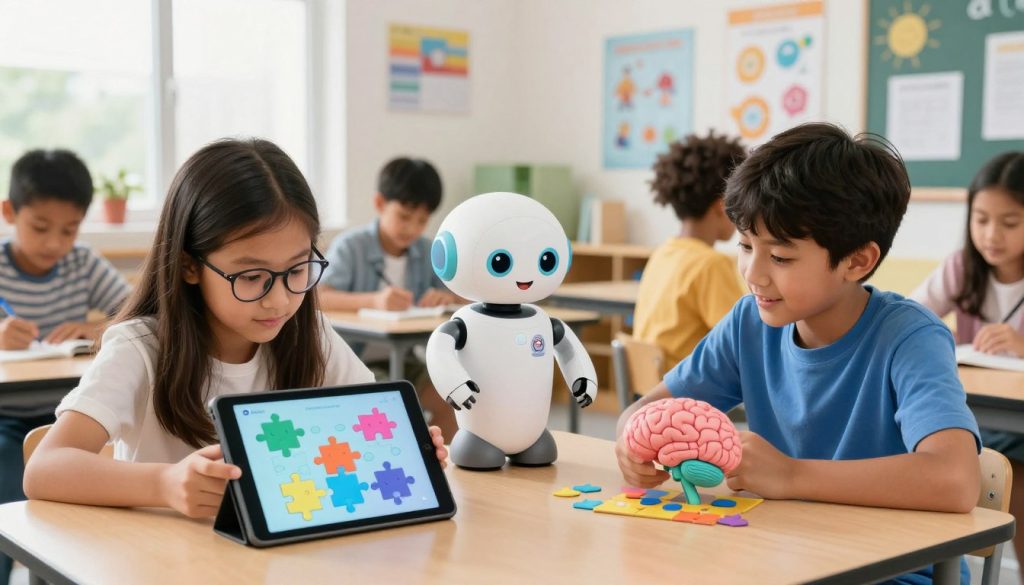
In the United States, the influence of AI in logical games spans various domains. For example, educational platforms are integrating AI to teach logical reasoning skills effectively, enhancing cognitive development among students. Competitive gaming platforms are also embracing AI technology, enabling players from around the world to face off against sophisticated virtual opponents. This synergy of AI and gaming undoubtedly heralds a new era, prompting both players and game developers to rethink their strategies and approaches.
As we navigate this evolving landscape, exploring both the algorithms that facilitate these changes and their broader implications for society offers valuable insights into the future of logical gaming.
DISCOVER MORE: Click here to learn how mind games can help
Unpacking AI Algorithms in Logical Games
The application of artificial intelligence in logical games extends far beyond mere gameplay. At its core, the intersection of AI and logical puzzle-solving hinges upon algorithms specifically designed to tackle challenges that once required human intuition and creativity. These algorithms serve as the backbone of sophisticated AI systems, enabling them to analyze game mechanics, predict opponent moves, and strategize outcomes in a manner that was once unimaginable.
The Mechanics Behind Game-Solving Algorithms
Algorithms used in logical games typically leverage diverse methodologies to enhance problem-solving capabilities. Some common approaches include:
- Search Algorithms: These algorithms systematically explore the potential moves available in a game. For example, the Minimax algorithm is widely used in two-player games, where it computes the optimal move by minimizing the possible loss for the worst-case scenario.
- Machine Learning Models: By analyzing vast datasets of previous game scenarios, these models can learn and adapt strategies over time. Reinforcement learning, a key area of machine learning, allows AI to improve its strategies through trial and error.
- Heuristic Functions: These functions provide algorithms with a way to rank potential moves based on their potential effectiveness. They help achieve faster decision-making by prioritizing the most promising options.
Each of these methodologies plays a crucial role in enhancing gameplay, often resulting in AI opponents capable of overwhelming human players. These algorithms not only streamline the decision-making process but also redefine the competitive landscape, forcing players to rethink their strategies.
Case Studies of AI in Logical Games
Numerous real-world examples illustrate the profound impact that AI algorithms have had on logical games. For instance, IBM’s Deep Blue, which famously defeated chess grandmaster Garry Kasparov in 1997, utilized a combination of search algorithms and heuristic evaluation techniques to assess millions of positions per second. This landmark event not only underscored the capabilities of AI but also served as a pivotal moment in the inherent relationship between human intellect and machine learning.
Further, projects like OpenAI’s DOTA 2 AI, which competes at a high level in complex multiplayer settings, showcase how advanced algorithms can navigate multifaceted interactions among players. This project utilized deep reinforcement learning, training through countless simulated matches, allowing the AI to develop strategies that consistently outperformed expert human players.
Bridging the Gap between Human Intuition and AI Strategies
As AI continues to evolve, the challenge remains: how can these algorithms capture the essence of human intuition? The rich nuances, gamble instincts, and unpredictable decision-making that often dictate gameplay lend an air of creativity to logical games. While AI excels in data-driven strategic planning, the ability to replicate the often irrational elements of human judgment could redefine how these technologies are perceived by players and developers alike.
In conclusion, the ongoing developments in algorithms that can solve puzzles illustrate the extraordinary capabilities of AI in logical games. The implications for both competitive play and educational purposes are immense, encouraging a new generation of players to engage with complex problem-solving in innovative ways. As AI continues to revolutionize the landscape of logical games, understanding the intricacies of its algorithms promises to reveal deeper insights into both gameplay and human cognition, setting the stage for future discoveries in the realm of artificial intelligence.
| Advantages | Key Features |
|---|---|
| Enhanced Problem-Solving Skills | Logical games sharpen critical thinking through complex puzzles. |
| AI-Powered Assistance | Algorithms identify optimal strategies, supporting human players. |
| Data-Driven Insights | Analyzing player behavior helps refine game mechanics and challenge levels. |
| Engaging Learning Experience | Combines entertainment with education seamlessly, appealing to diverse audiences. |
Exploring the relationship between logical games and artificial intelligence unveils a rich tapestry of benefits that transform gameplay and learning. The integration of advanced algorithms not only enhances traditional puzzle-solving techniques but also introduces innovative training methods for budding strategists. With AI capable of analyzing patterns and offering tailored challenges, players experience heightened engagement and skill development.Furthermore, these algorithms dissect player interactions, leading to a more tailored gaming experience that dynamically adjusts to individual progress and preferences. The capacity to provide real-time feedback allows users to engage deeply with problem-solving strategies, fostering a relentless pursuit of precision and creativity in their approaches to puzzles. This intersection holds great promise for future advancements in cognitive training and gaming, making it a pivotal area of exploration for enthusiasts and researchers alike.
DISCOVER MORE: Click here for insights on cognitive challenges and mental well-being
Exploring the Future of AI in Logical Puzzles
As we delve deeper into the capabilities of artificial intelligence in solving logical puzzles, it is essential to highlight the advancements on the horizon. The convergence of AI with more complex logical games signifies a shift towards systems that not only participate but also learn from each interaction, raising the bar for both machines and human players.
Advanced Techniques Reshaping AI Capabilities
Some of the most exciting developments in AI involve combining multiple algorithmic strategies for a more holistic approach. Techniques such as neuro-symbolic reasoning are emerging, which blend neural networks with symbolic AI to better understand and manipulate rules within logical puzzles. This hybrid method allows AI to reason about abstract concepts while learning from patterns found in data.
The increasing availability of powerful computational resources and large datasets is also propelling the evolution of algorithms. AI can now analyze data faster than ever, leading to the introduction of metagaming concepts that encourage players to strategize not just on synergy with other players but also against AI that adapts in real time.
AI Representation and Interaction in Logical Games
The representation of AI in logical games is another aspect worth examining. In recent years, we have witnessed game developers leveraging AI-generated narratives, allowing players to engage with dynamic storylines that adjust based on player decisions. This development enhances immersion and emphasizes how AI is reshaping storytelling aspects within games, fundamentally altering the traditional linear plot structures.
Additionally, multidisciplinary approaches that integrate psychology and behavioral sciences into AI algorithms have emerged. By simulating human-like responses, these systems can create more relatable AI opponents that mimic human gameplay. Ongoing research in cognitive computing focuses on implementing traits of emotional intelligence in AI, which may help machines apply a level of unpredictability akin to human intuition.
Real-World Implications and Ethical Considerations
The implications of AI’s growing role in logical games extend beyond entertainment. Advanced algorithms have the potential to influence educational initiatives that harness game-based learning to teach logical thinking and problem-solving skills. Tools like puzzle-centric educational apps utilize AI to provide tailored learning experiences, adapting to individual learning curves.
However, as AI systems become increasingly adept at mastering logical games, ethical considerations also come to the forefront. Questions about bias in AI decision-making or the fairness of AI in competitive environments spark debates among developers, players, and policymakers. Understanding how to govern and regulate AI’s role in gaming will be crucial in ensuring a balanced playing field, where technology enhances rather than undermines the essence of competition.
Legacy of AI in Logical Gaming: Preparing for Tomorrow
The legacy of systems like IBM’s Deep Blue and OpenAI’s DOTA 2 AI has paved the way for groundbreaking advancements in logical games and AI interactions. With every iteration, these systems become not only more advanced but also more integrated into the culture of gaming itself, steering the design of new strategic frameworks and educational tools. The synergy between human creativity and AI sophistication suggests exciting times ahead for both developers and players.
As research progresses and technology continues to evolve, the intersection of logical games and artificial intelligence promises enhanced experiences that will charm and challenge players while continuously transforming our understanding of games as tools for cognitive development. The journey is poised to reveal further discoveries that intertwine player experience with AI innovation, captivating a community eager to explore the mechanics of logic and strategy.
Dive deeper into this topic: Click here to learn more
Conclusion: The Bridging of Minds and Machines in Logical Games
As we reflect on the remarkable intersection of logical games and artificial intelligence, it becomes evident that we are standing on the brink of a new era in both gaming and technology. The exploration of AI-driven algorithms has not only unveiled the potential for machines to solve intricate puzzles but also reshaped our understanding of strategy, creativity, and player engagement. With advancements such as neuro-symbolic reasoning and metagaming strategies, AI is evolving into a formidable opponent and an invaluable ally, enriching the gaming landscape.
Moreover, the integration of AI in logical games has profound implications for education, offering interactive platforms that cultivate critical thinking and problem-solving skills in a dynamic manner. As these tools become more personalized, they hold the promise of bridging education and entertainment, empowering the next generation of thinkers.
However, this technological advancement is not without its challenges. As AI systems become increasingly sophisticated, issues of ethics, fairness, and bias in decision-making processes must be meticulously addressed. The responsibility lies with developers, players, and policymakers to create an equitable gaming environment that uplifts human experience rather than diminishes it.
Looking ahead, the legacy of legendary systems such as IBM’s Deep Blue reaffirms the invaluable role AI plays in logical gaming. The future beckons with enticing possibilities, as innovations continue to emerge that amplify our cognitive capabilities and reshape the narrative landscape of games. By embracing this synergy between human ingenuity and machine learning, we are not merely playing games; we are embarking on a journey to redefine what it means to think critically and creatively in an increasingly digital world.
Related posts:
Logical Puzzles as Educational Tools in School Environments
Logical Puzzles and Mental Health: How They Can Reduce Stress and Enhance Well-Being
The Influence of Logic Puzzles on Everyday Problem Solving
How Logical Games Can Improve Cognitive Performance in Children and Adults
Developing Critical Thinking Through Logical Puzzles
The Impact of Logical Games on Socialization and Collaboration among Groups

Linda Carter is a writer and puzzle expert specializing in mind games, brain teasers, and cognitive challenges. With extensive experience helping individuals enhance their problem-solving skills and think critically, Linda shares her knowledge on our platform. Her goal is to empower readers with practical advice, engaging puzzles, and strategies to sharpen their minds and achieve success in the captivating world of mind games and puzzles.