The Effect of Competitive Mind Games on Team Dynamics and Collaboration Skills

The Power of Competitive Mind Games
In an era where workplace synergy is paramount, competitive mind games are evolving as an impactful strategy to boost engagement and collaboration among team members. These stimulating activities not only entertain but also serve as a catalyst for profound organizational change. By incorporating elements of competition, employees are drawn into scenarios that require strategic thinking, rapid decision-making, and effective communication—all invaluable skills in today’s fast-paced business world.
Enhanced Communication
One of the foremost benefits of competitive mind games is the promotion of enhanced communication. By engaging in these activities, team members are encouraged to vocalize their thoughts and strategies. For instance, consider a game such as “Escape Room,” where teams must collaborate to solve puzzles within a time limit. This scenario compels participants to articulate their ideas clearly and listen actively to their peers. As a result, open dialogues become more commonplace, breaking down barriers that often exist in traditional workplace communication.
Trust-Building
Trust among team members is the backbone of any successful organization. Competitive mind games provide an avenue for trust-building as individuals learn to depend on one another to navigate challenges. A classic example is the tower-building competition, where teams must construct the tallest structure using limited resources. Success in this game hinges on effective collaboration and a shared trust in each other’s abilities. Participants must recognize that relying on one another is essential, fostering a sense of camaraderie and mutual respect that carries over into everyday work interactions.
Conflict Resolution
While competition can sometimes exacerbate tensions, it can also serve a constructive purpose in team dynamics, particularly in conflict resolution. Through structured competition, underlying disputes often surface, allowing teams to address issues in a controlled environment. For instance, a debate-based game where factions argue for differing approaches to a business strategy can highlight divergent opinions and facilitate constructive conversations around conflict. Providing a safe space for these discussions can lead to productive outcomes and stronger relationships among team members.
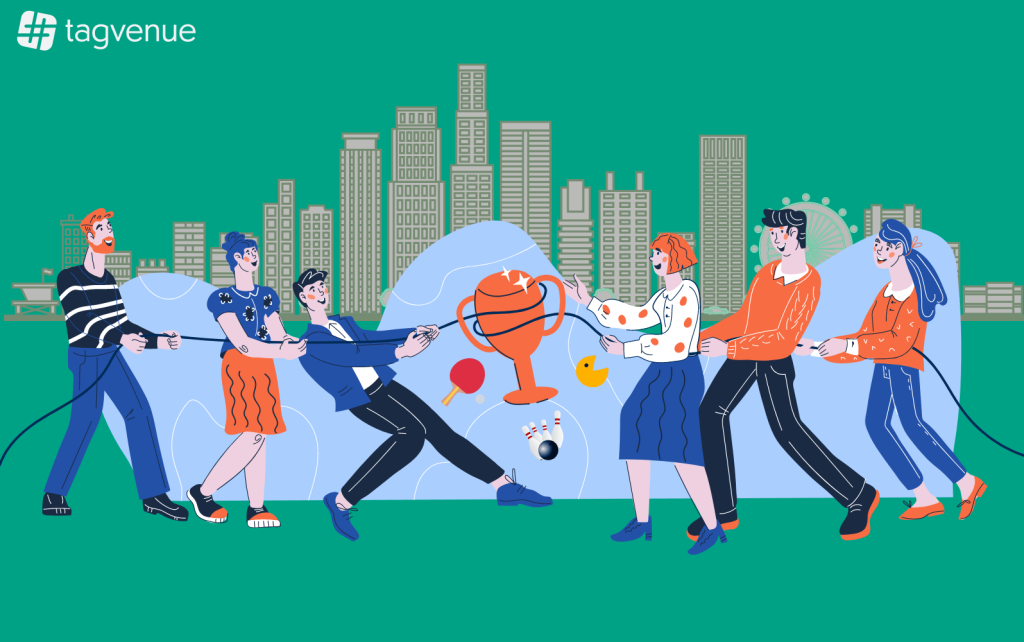
The outcomes of organizations embracing competitive mind games are palpable. Research shows that teams partaking in such activities tend to display increased productivity and a unified team spirit. For example, tech giants like Google and Facebook have integrated these principles into their work culture, utilizing activities that infuse fun with functional teamwork. Employees report higher job satisfaction, consequently reducing turnover rates.
This progression reflects a significant shift in traditional team-building paradigms, moving away from passive workshops to dynamic and engaging experiences that challenge teams intellectually and socially. As organizations continue to adapt in a competitive landscape, harnessing the potential of competitive mind games could be the key to cultivating not just employees who work together, but teams that thrive together.
DISCOVER MORE: Click here to learn about the benefits
Fostering Creativity and Innovation
Another remarkable effect of competitive mind games is their ability to foster creativity and innovation within teams. By introducing elements of friendly competition, these activities encourage participants to think outside the box and generate inventive solutions to complex problems. For example, a game like “Shark Tank,” where team members pitch new product ideas to a panel of judges, mimics the real-world pressure of innovation. Teams must brainstorm and refine their concepts within a limited time frame, which can lead to out-of-the-box thinking and a higher level of engagement among participants.
This synergy between competition and creativity is supported by research from organization behavior studies, indicating that engaging in competitive tasks drives individuals to elevate their performance levels. According to a 2022 report from the American Psychological Association, teams exposed to competitive challenges were 36% more likely to propose original ideas during brainstorming sessions compared to those in non-competitive settings. Such findings underscore the potential for competitive mind games to unlock the creative competencies of teams in diverse industries.
Boosting Morale and Engagement
Competitive mind games also have a significant impact on morale and engagement within the workplace. Participation in these activities often results in a positive shift in team dynamics that can enhance overall job satisfaction. The thrill of competition introduces an element of fun that can break the monotony of daily routines. For instance, a company-wide trivia contest or online game can serve as an engaging break from the typical workday, subsequently reinvigorating employees. Activities that yield immediate rewards or recognition can further enhance motivation, leading to an increased commitment to team goals.
In practice, leading firms in the United States have embraced competition as a means to uplift workplace morale. Companies like Microsoft have successfully implemented gamified training sessions, where employees earn points and rewards for achieving specific learning objectives. Those who engage in these programs report not only a heightened sense of enthusiasm but also a greater alignment with organizational goals.
- Encouragement of innovative thinking: Employees are more likely to push boundaries and develop fresh ideas.
- Increased participation: Team members become more engaged when they find joy in the tasks at hand.
- Recognition opportunities: Earning accolades in competitions boosts employees’ self-esteem and morale.
- Stronger team bonds: Winning together fosters deeper relationships based on shared experiences.
In summary, competitive mind games serve as powerful agents in enhancing creativity, morale, and engagement. By transforming traditional team interaction methods and creating an exciting environment, organizations are not just cultivating capable employees; they are also nurturing vibrant teams that can withstand the tests of the evolving workplace. As competition fuels ingenuity and cohesiveness, embracing these games may very well be the key to thriving in an increasingly collaborative landscape.
The Effect of Competitive Mind Games on Team Dynamics and Collaboration Skills
Engaging in competitive mind games can significantly enhance team dynamics and collaboration skills. These games encourage participants to work towards a common objective while fostering a spirit of healthy competition. One of the primary advantages is the development of stronger relationships among team members. Participation in these games allows individuals to communicate effectively, negotiate, and resolve conflicts, thus paving the way for improved teamwork. Additionally, competitive mind games often expose teams to real-world scenarios that mimic workplace challenges. This experience equips team members with essential problem-solving skills and the ability to think critically under pressure. As they navigate through various challenges together, they learn to trust one another, creating a more unified and cohesive team.Moreover, the strategic elements incorporated into these games compel teams to strategize and allocate roles based on individual strengths and weaknesses. This not only maximizes individual contributions but also enhances overall team performance. As team members become more aware of each other’s capabilities, they cultivate a sense of interdependence, ultimately leading to increased productivity and cooperation in the workplace.Understanding the effects of competitive mind games on team dynamics can serve as an invaluable tool for organizations aiming to build collaborative cultures that thrive on mutual respect and shared goals. By embracing these engaging activities, teams can unlock their full potential, transforming challenges into opportunities for growth and innovation.
| Category | Advantages |
|---|---|
| Strengthening Relationships | Promotes effective communication and conflict resolution among team members. |
| Skill Development | Fosters critical thinking, problem-solving, and strategic planning under pressure. |
In addition to the aforementioned benefits, participation in competitive mind games can also lead to enhanced adaptability among team members. As they face challenges that require quick thinking and flexibility, teams learn to adjust their strategies in real time, a skill that is immensely valuable in rapidly changing business environments. This adaptability not only improves individual resilience but also supports the overall agility of the team, allowing them to pivot effectively when faced with unexpected obstacles. Overall, the interactive environment created by competitive mind games can result in a profound transformation of team dynamics, fostering a culture of collaboration that extends beyond the gaming arena and into daily workplace interactions. Engaging in these activities lays the groundwork for long-term success and collaboration within the team, making them a vital component of team-building strategies.
DON’T MISS: Click here to discover how mind games can boost problem-solving skills in children
Enhancing Communication and Trust
Another significant effect of competitive mind games lies in their capacity to enhance communication and trust among team members. When engaged in these games, individuals are often required to communicate their ideas, strategies, and roles to succeed. This necessary dialogue fosters not only the sharing of information but also a deeper understanding of each team member’s strengths and weaknesses. For instance, a popular game such as “Escape Room Challenge” necessitates that participants work closely together, articulating their thoughts clearly and reacting to each other’s inputs in real time. This dynamic creates an opportunity for team members to practice and improve their communication skills in a low-stakes environment.
Furthermore, the shared experience of striving for a common goal enhances trust within the group. A 2021 study published by the Journal of Organizational Behavior found that teams engaging in competitive activities reported a 25% increase in trust levels post-activity compared to their non-competitive counterparts. Trust acts as a catalyst for collaboration and is vital to the success of any team-oriented work. When employees feel safe to express their ideas and take risks, it not only cultivates an environment conducive to innovation but also enables easier conflict resolution when disagreements arise.
Developing Leadership Skills
Competitive mind games can also be instrumental in developing leadership skills among team members. By allowing individuals to take on varying roles during gameplay, these activities can highlight potential leaders and contribute to the cultivation of their interpersonal capabilities. For instance, in team-building exercises like “The Great Egg Drop,” participants must collaborate to design a protective casing for an egg, identifying who naturally takes charge in delegating tasks and guiding their peers toward a successful outcome. This setting provides an authentic space for leadership qualities to flourish, setting the groundwork for future organizational leaders to emerge.
The emphasis on competition enhances the stakes involved, motivating individuals to step up and take responsibility. Leadership development through competitive mind games has been validated by research from the Center for Creative Leadership, indicating that a hands-on approach to skill-building, as seen in competitive environments, results in a 40% increase in the perceived effectiveness of emerging leaders. By embracing competition in this manner, organizations are better positioned to align leadership development with their overarching goals and values.
- Communication enhancement: Team members practice articulating thoughts clearly and effectively.
- Trust building: Shared objectives and success foster stronger relationships within teams.
- Leadership identification: Natural leaders emerge through competitive scenarios, revealing potential where previously unrecognized.
- Conflict resolution: Increased trust and communication skills allow for more effective handling of disagreements among team members.
Incorporating competitive mind games into team activities can lead to a collaborative atmosphere enriched with trust and communication. Through these interactive experiences, organizations not only encourage team bonding but also cultivate critical leadership qualities that may serve beneficially within the modern corporate landscape. As these dynamics evolve, it is clear that competitive mind games are more than simple entertainment; they are impactful tools for enhancing team effectiveness and cohesion.
DIVE DEEPER: Click here to discover more
Conclusion
In conclusion, the impact of competitive mind games on team dynamics and collaboration skills cannot be overstated. These interactive experiences are not merely about fun and friendly rivalry; they serve as a profound mechanism for fostering essential skills that drive success within teams. As explored in this article, the benefits include enhanced communication, increased trust, and the development of leadership qualities among team members.
Through engaging in competitive mind games, teams learn to articulate their thoughts clearly and effectively while gaining a deeper appreciation for each member’s unique strengths. The data indicates a significant improvement in trust levels among participants, laying the foundation for a collaborative environment where innovation can thrive. Additionally, the identification of potential leaders during these activities allows organizations to cultivate a pool of talent ready to meet future challenges.
As businesses continuously adapt to an ever-changing landscape, integrating competitive mind games into team-building activities provides a strategic advantage. These games not only help in honing collaboration skills but also prepare individuals for real-world situations requiring quick decision-making and problem-solving abilities. Organizations should view competitive mind games as a vital investment in their human capital, fostering not just teamwork, but a culture of excellence that is essential in today’s competitive market.
Therefore, as leaders strive to enhance team effectiveness, it is imperative to consider the powerful role that competitive mind games can play in shaping successful outcomes. Their ability to create a dynamic, engaging, and collaborative environment serves as a catalyst for both personal and organizational growth.
Related posts:
How Collaborative Mind Games Can Improve Communication Skills Among Seniors
The Benefits of Cognitive Challenges in Developing Emotional Intelligence
How Different Types of Puzzles Can Foster Critical Thinking Skills
The Role of Virtual Reality in Enhancing Cognitive Game Experiences
The Impact of Cognitive Puzzles on Brain Health in Aging Adults
The Influence of Cognitive Games on Memory Retention and Recall

Linda Carter is a writer and puzzle expert specializing in mind games, brain teasers, and cognitive challenges. With extensive experience helping individuals enhance their problem-solving skills and think critically, Linda shares her knowledge on our platform. Her goal is to empower readers with practical advice, engaging puzzles, and strategies to sharpen their minds and achieve success in the captivating world of mind games and puzzles.