Psychology-Based Decluttering Techniques: How to Free Up Space and Relieve Anxiety

Unlocking Tranquility Through Decluttering
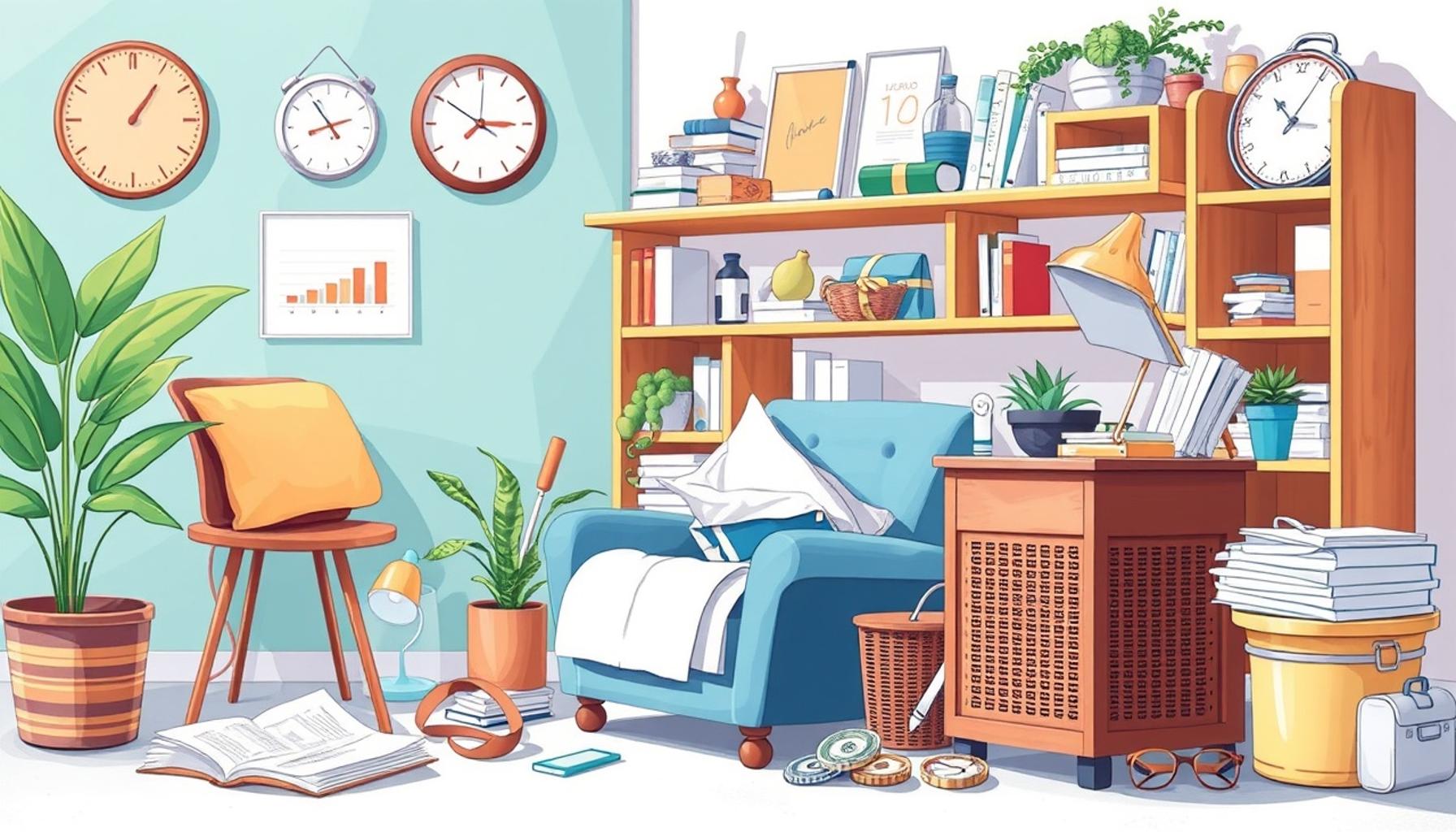
In today’s fast-paced world, the clutter in our homes can mirror the chaos in our minds. It’s a common scenario: an overflowing closet, stacks of unopened mail, or a garage so filled with unused items that it no longer serves its purpose. This disarray not only obstructs physical movement through our spaces but can also cloud our mental clarity and peace. That’s why many individuals are now embracing psychology-based decluttering techniques to reclaim both their physical and mental environments.
Research indicates that a cluttered environment can significantly escalate feelings of anxiety and overwhelm. The connection between physical clutter and mental stress is profound; studies suggest that disorganization can interfere with our ability to focus and process information effectively. Consequently, implementing effective decluttering strategies can lead to remarkable improvements in well-being and overall life satisfaction.
Consider the following approaches:
- The “One In, One Out” Rule: For every new item you introduce into your home, commit to removing one item. This practice curbs excessive accumulation and encourages mindful purchasing. For instance, if you decide to buy a new pair of shoes, donate or dispose of an old pair to maintain balance.
- Chunking: To avoid feeling overwhelmed, break down the decluttering process into manageable tasks. Instead of tackling your entire home, focus on one area at a time—such as a single drawer or a corner of your living room. Establish a timeline, perhaps dedicating just 30 minutes a day, which can transform the daunting task into a series of achievable goals.
- Sentimental Value Assessment: Evaluate items based on their emotional significance instead of merely sentimental attachment. For example, a photograph from a memorable trip may hold more value than a collection of old trophies you haven’t used in years. By prioritizing emotional impact, you can make more objective decisions about what to keep and what to let go.
These methods not only create a more organized environment but also contribute to significant reductions in anxiety. When the space around us is orderly, our minds can function more freely, allowing for increased creativity and focus. A clear room often leads to a clear mind, paving the way for better personal productivity and mental health.
In summary, decluttering is not just about aesthetics—it’s a pathway to improved emotional well-being. Embracing the harmony brought by a tidy space can lead to greater resilience against the stresses of modern life. As we continue to explore practical techniques, you may discover even more ways to cultivate balance and peace within your surroundings.
DISCOVER MORE: Click here for creative ideas on utilizing those forgotten spaces
Transforming Your Space: Practical Techniques for Decluttering
To effectively tackle the chaos that clutter creates, it’s crucial to apply techniques grounded in psychological principles. Understanding why we hold onto certain items is the first step in creating a more serene and organized environment. Emotions often play a significant role in our attachment to belongings, making it challenging to let go. By adopting specific strategies, you can shift your mindset and begin to free up not just physical space, but mental clarity as well.
One widely adopted technique is the “Four-Box Method.” This approach encourages individuals to categorize items into four distinct boxes: Keep, Donate, Sell, and Trash. By physically sorting belongings into these categories, you create a structured framework that simplifies decision-making. This method not only helps clarify what you truly value but also instills a sense of accomplishment as you see items being actively processed rather than just piling up.
Another effective strategy is the psychological concept of visualization. Before starting your decluttering journey, take a moment to envision the final outcome: a clean, organized space that promotes peace and productivity. Creating a mental image of your ideal environment can motivate you to commit to the process and reinforce the benefits that decluttering brings. Consider integrating this visualization into a daily routine—imagine waking up to a serene space each morning, leading to greater motivation to maintain tidiness.
Moreover, timing plays an essential role in this endeavor. Studies indicate that emotional states fluctuate throughout the day, often impacting our decision-making abilities. Identifying your peak productivity times is a wise step. Some individuals feel most energized and focused in the morning, while others may find their stride later in the day. Scheduling decluttering sessions during these optimal times can enhance your efficiency and lead to better outcomes.
To further streamline your decluttering process, consider implementing the following action items:
- Set Clear Goals: Establish specific objectives for each decluttering session, such as clearing out a particular room or minimizing duplicate items.
- Limit Distractions: Create an environment conducive to focus by turning off your phone or minimizing background noise. This helps maintain momentum as you declutter.
- Involve Others: Share your decluttering journey with friends or family, inviting them to join you. This social aspect can hold you accountable and enhance motivation.
Incorporating these techniques not only assists in freeing up physical space but also serves as a catalyst for relieving anxiety. As your surroundings become more organized, a ripple effect occurs within your mind, leading to enhanced emotional well-being. The power of decluttering transcends mere aesthetics; it is an invitation to rediscover your personal sanctuary amidst the distractions of everyday life.
| Technique | Advantages |
|---|---|
| The Minimalist Mindset | Encourages clarity by focusing on essentials, reducing decision fatigue, and enhancing overall mental well-being. |
| Emotional Attachment Assessment | Helps identify items that cause stress versus joy, creating a healthier living environment and fostering emotional healing. |
When applying psychology-based decluttering techniques, the benefits extend beyond mere organization. The Minimalist Mindset fosters an atmosphere where individuals prioritize essentials, leading to enhanced focus and reduced stress. It invites individuals to reflect on their consumption and the psychological impact of excess belongings, motivating them to find peace amid chaos. On the other hand, Emotional Attachment Assessment is a transformational approach that encourages one to evaluate their relationship with possessions. By doing so, it becomes easier to eliminate items that contribute to anxiety, thereby clarifying not only physical space but also mental clarity. This vital process can trigger long-standing emotional growth, enabling individuals to embrace change with a sense of freedom. Each technique serves as an integral part of a larger strategy, paving the way towards a harmonious, less cluttered life.
DISCOVER MORE: Click here to uncover creative uses for unused spaces
Mindful Decluttering: Fostering Awareness and Intentionality
As you progress in your decluttering journey, it’s essential to incorporate mindfulness into the process. Mindfulness encourages a heightened awareness of your thoughts and feelings, allowing you to approach decluttering with a sense of purpose. This technique can diminish the anxiety often associated with letting go of belongings by cultivating a non-judgmental perspective. Practicing mindfulness means being present in each moment and recognizing which items serve you emotionally and which do not.
Begin by taking a few deep breaths before tackling a specific area. Ask yourself thoughtful questions like, “Does this item bring me joy?” or “How often do I use this?” This inquiry not only aids in decision-making but also reinforces positive emotional associations with the objects you choose to keep. Research has shown that individuals who practice mindfulness experience reduced stress levels and increased overall emotional well-being, transforming decluttering into a therapeutic, rather than a burdensome, chore.
An excellent extension of this practice is the one-in, one-out rule. For every item you bring into your home, commit to removing one. This not only helps maintain the balance of your living space but also encourages continuous reflection on your consumption habits. This strategy is particularly useful for those who struggle with impulsive purchases, as it naturally curtails excessive accumulation of items that might contribute to stress.
Another enlightening method is the application of the 30-Day Minimalism Game, a challenge that encourages you to get rid of a certain number of items corresponding to the day of the month. For example, on the first day, you eliminate one item; on the second day, two items; and so forth. By the end of the month, you will have decluttered a staggering 465 items! This method can spark excitement and momentum around decluttering, transforming it into a playful experience. Participating in such games fosters collaboration and community, providing an excellent opportunity to connect with like-minded individuals who share your goal of a more serene space.
Using organizational labels can also enhance your decluttering experience. Once you’ve decided to keep specific items, categorize them clearly. Utilize bins, boxes, or shelves and label them to remind you of their purpose. Visual cues can significantly reduce mental clutter and increase the likelihood of maintaining order. The act of visually organizing can be incredibly satisfying; studies have indicated that cognition can be improved in tidy environments, thereby allowing for better focus and creativity.
Moreover, consider the emotional baggage tied to sentimental items. Items such as clothing from past relationships or childhood mementos can hold you emotionally hostage, preventing you from fully embracing the present. If you’re struggling to let go, photograph these items, or create a scrapbook to honor their memory without taking up physical space. This allows for the processing of emotions while still achieving your decluttering goals.
Finally, don’t shy away from the transformative power of professional help. If you find yourself overwhelmed, consider hiring a licensed organizer or a mental health professional specializing in hoarding and clutter issues. These experts can offer tailored strategies to alleviate anxiety while guiding you through the decluttering process. This investment can pave the way for lasting changes, ensuring that decluttering becomes not just a one-time task but a sustainable lifestyle choice.
By embracing these mindful decluttering techniques, you cultivate not only an organized living environment but also the mental space needed to flourish. As you navigate the physical and emotional layers of your belongings, you are ultimately journeying towards a more liberated and joyful existence.
DISCOVER MORE: Click here for innovative ideas
Conclusion: Embracing the Journey Towards a Clutter-Free Mind
In an age where the physical and mental clutter can become overwhelming, applying psychology-based decluttering techniques presents an effective pathway to not just an organized space, but a calmer mind. By integrating strategies such as mindfulness, the one-in, one-out rule, and engaging challenges like the 30-Day Minimalism Game, individuals can transform decluttering into a purposeful and liberating activity. These techniques not only facilitate decision-making but also foster self-reflection, enabling deeper connections with our possessions and our emotional responses to them.
Consider the additional benefits of enhancing your organization with labels and confronting emotional baggage associated with sentimental items. By opting for practical solutions like photographing mementos or seeking the assistance of professional organizers, you invite sustainable changes into your life. Accomplishing decluttering tasks not only frees up physical space but can profoundly influence overall mental well-being. Studies suggest that a tidy environment enhances focus, boosts creativity, and alleviates anxiety, transitioning decluttering from a daunting task to a gratifying experience.
As you embark on your decluttering journey, remember that it is about more than just creating a serene environment; it’s about nurturing a lifestyle that prioritizes peace and intentionality. Each item you choose to keep or release is a step towards a more liberated existence. Engage in this process with curiosity and compassion, and watch as you transition not only your space but also your state of mind. Embrace the clarity that comes with freeing up both your surroundings and your mental landscape, paving the way for a brighter, more organized future.
Related posts:
Effective Decluttering Methods: How to Keep Your Space Organized Long-Term
How the KonMari technique can transform your space and your mind
Decluttering Techniques for Workspaces: Creating a Productive and Minimalist Environment
Decluttering in Seasons: Adapting Your Techniques to the Cycle of the Year
The Emotional Impact of Decluttering: Releasing Space and Mind for the New
The role of checklists in the decluttering process: how to stay focused and motivated

Beatriz Johnson is a seasoned productivity strategist and writer with a passion for simplifying the complexities of time management and personal organization. With over a decade of experience in efficiency optimization, she specializes in topics like workflow design, habit formation, and productivity systems for modern professionals. Through her work, Beatriz empowers readers to take control of their schedules, eliminate overwhelm, and stay ahead in today’s fast-paced world.