The impact of challenging puzzles on mental agility and memory

The Cognitive Benefits of Engaging with Puzzles
In our fast-paced society, where digital distractions compete for our attention, it is essential to carve out time for activities that promote mental agility and enhance our memory. One of the most enjoyable and effective methods is engaging with challenging puzzles. These diversions offer not just entertainment but also significant cognitive benefits, acting as a workout for the brain.
Numerous studies have highlighted the positive effects of solving puzzles. For instance, a study published in the journal Frontiers in Aging Neuroscience found that older adults who regularly engaged in puzzles scored higher on cognitive tests than those who did not. This indicates a strong correlation between puzzle-solving and improved mental capacities, particularly as we age.
Among the plethora of advantages derived from puzzle engagement, three stand out distinctly:
- Improved problem-solving skills. Puzzles require players to think critically and creatively, often necessitating the development of strategies to overcome challenges. This practice translates well into real-world problem-solving scenarios, be it in personal situations or professional environments.
- Enhanced memory function. Regular puzzle solvers are often better at recalling details, as the brain becomes accustomed to making connections between bits of information. For example, crossword enthusiasts often show improved vocabulary and verbal memory due to their constant engagement with new words and concepts.
- Increased focus and concentration. The immersive nature of puzzles demands significant attention, making them a practical tool for enhancing one’s ability to concentrate. Studies have shown that spending just a few minutes on puzzles can hone your focus, making subsequent tasks feel easier and more manageable.
Exploring different types of puzzles can further enrich our mental experience. Consider crosswords, which sharpen verbal skills, or sudoku that fine-tunes logical reasoning and numerical aptitude. Jigsaw puzzles, on the other hand, enhance spatial awareness and require a holistic view in order to complete the picture.
Moreover, regularly tackling a new puzzle can significantly enhance quick decision-making abilities. The need to make rapid assessments and choices fosters a mental agility that is applicable in everyday decision-making.
Importantly, the role of memory in solving these complex challenges cannot be overstated. Engaging with puzzles exercises both working memory, which we use to hold information temporarily, and long-term memory, enhancing our overall cognitive functions.
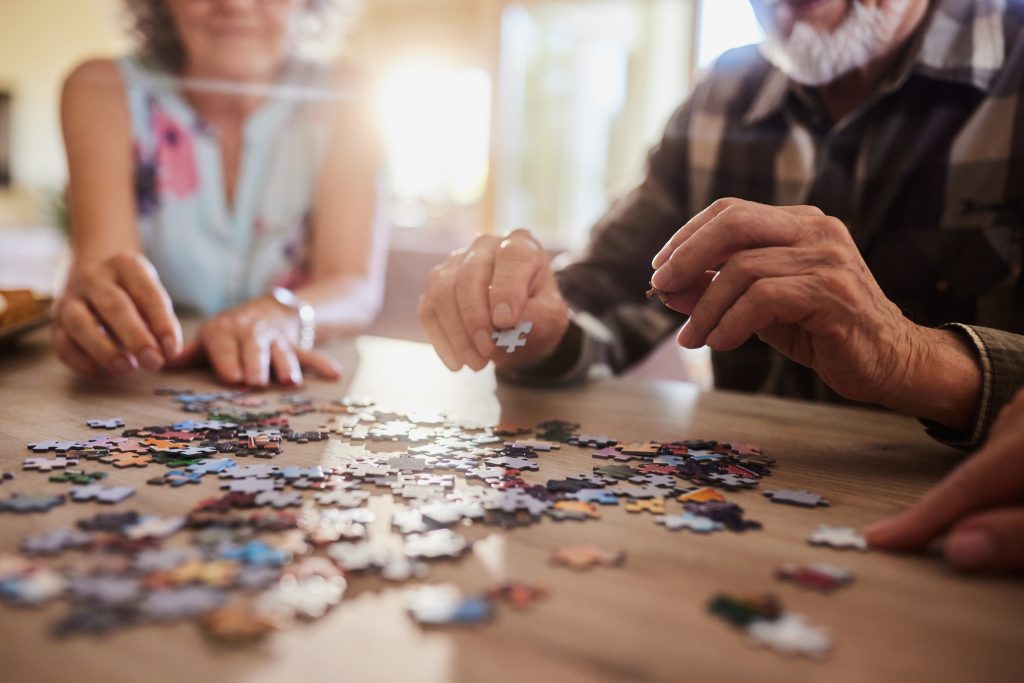
The potential long-term benefits for senior adults are also noteworthy. Beyond merely preventing cognitive decline, regular puzzle engagement can significantly improve quality of life by keeping the mind active and enhancing social interactions within puzzle communities or groups.
As we delve deeper into the fascinating relationship between challenging puzzles and our mental capabilities, the transformative power of these activities becomes increasingly apparent. Are you ready to unlock your mind’s potential? Join us on this journey of exploration and discover just how enriching the world of puzzles can be.
DISCOVER MORE: Click here to dive deeper
How Puzzles Foster Mental Agility
Challenging puzzles serve as an exceptional tool for boosting mental agility. When enthusiasts engage in activities such as crossword puzzles, sudoku, or logic games, they are not merely entertained; they are actively reconfiguring neural pathways in their brains. This mental exercise is akin to physical workouts, where the more one practices, the better one becomes.
One of the striking aspects of challenging puzzles is their ability to enhance neuroplasticity, which is the brain’s capacity to adapt and reorganize itself by forming new neural connections throughout life. Research has shown that solving complex puzzles regularly can influence cognitive functions significantly. For instance, a report featured in the *Journal of Cognitive Psychology* indicated that individuals who consistently tackle mentally demanding puzzles performed better on a variety of cognitive tasks compared to those who did not—a clear indication that the brain thrives on challenge.
Moreover, the connection between puzzle-solving and improved mental flexibility cannot be overlooked. As individuals confront diverse types of challenges through puzzles, they are compelled to switch strategies and thought processes. This mental flexibility is not just advantageous for puzzle solving; it also translates into enhanced adaptive thinking in everyday scenarios such as workplace decision-making or navigating complex social interactions.
The Role of Memory in Puzzle Solving
At the heart of engaging with puzzles lies the intricate relationship between memory and performance. Puzzles require players to recall information, such as vocabulary in crosswords or numerical sequences in sudoku, enhancing both short-term and long-term memory functions. Engaging with these challenges frequently can sharpen one’s ability to remember details, bolstering overall cognitive health. A study conducted by the *Western Journal of Cognitive Science* found that individuals who participated in puzzle-solving activities showed remarkable gains in memory retention and retrieval processes.
Additionally, regular puzzle solvers often develop a unique skill set that allows them to draw parallels between pieces of information. This ability to make connections is integral to memory formation and can be particularly beneficial in academic and career pursuits. For instance, professionals in fields requiring advanced problem-solving skills, such as engineering or computer science, may find that skills honed through puzzle engagement directly influence their efficiency and creativeness.
Types of Puzzles and Their Cognitive Impact
Not all puzzles are created equal, and different types contribute uniquely to cognitive enhancement. Below are several categories of puzzles and their specific impacts on mental agility and memory:
- Crossword puzzles: These enhance vocabulary, improve verbal skills, and contribute to better verbal memory due to the continuous engagement with new words.
- Sudoku: This numerical challenge strengthens logical reasoning and numerical aptitude, requiring a keen eye for patterns.
- Jigsaw puzzles: These puzzles improve spatial awareness and visualization skills, demanding an overall understanding of how individual pieces fit together to form a complete picture.
As you explore these various forms of puzzles, consider incorporating them into your daily routine. Not only can they serve as a delightful source of entertainment, but they also promise invaluable cognitive benefits that can enhance your mental agility and memory over time.
| Advantages of Challenging Puzzles | Impact on Mental Agility and Memory |
|---|---|
| Enhanced Problem-Solving Skills | Challenging puzzles require critical thinking and strategy, fostering superior mental problem-solving abilities. |
| Improved Short-Term Memory | Engaging with puzzles boosts memory retention, as players must recall patterns and solutions. |
| Increased Focus and Concentration | Solving intricate puzzles sharpens the brain’s ability to focus on tasks, improving overall cognitive function. |
Diving deeper into the impact of challenging puzzles, it becomes evident that their role extends beyond mere entertainment. Engaging with puzzles stimulates cognitive processes that align closely with mental agility and memory enhancement. Studies suggest that individuals who regularly tackle difficult puzzles demonstrate a notable increase in brain plasticity, allowing for better adaptation and learning capabilities. Furthermore, such activities often lead to enhanced creativity. The diverse range of logic and reasoning needed to solve these puzzles ignites innovative thinking. The more complex the puzzle, the greater the mental workout, pushing the boundaries of cognitive abilities and leading to improved memory retention over time. As you delve into the world of challenging puzzles, remember that the journey not only entertains but also cultivates a sharper, more agile mind. Embracing this activity can open doors to new neural pathways, enriching your mental landscape.
DIVE DEEPER: Click here to learn more
The Broader Benefits of Puzzle Engagement
Engaging in challenging puzzles not only sharpens mental agility and enhances memory, but it also offers a plethora of additional benefits that can positively transform various aspects of an individual’s life. For many, the world of puzzles becomes a source of both enjoyment and growth, seamlessly blending entertainment with mental fitness.
Puzzles as Stress Relievers
One of the often-overlooked benefits of puzzle-solving is its potential for serving as a viable stress-relieving activity. When individuals immerse themselves in a puzzle, they tend to experience a state of flow—a psychological phenomenon where one becomes fully absorbed in an activity. This state can lead to reduced stress levels, as the focus on the puzzle provides a welcome distraction from daily worries. According to a study published in the *American Journal of Stress Management*, participants who engaged in puzzle-related tasks reported lower perceived stress levels both during and after their sessions. Therefore, regularly tackling a crossword or sudoku can not only sharpen the mind but also promote a calmer, more focused demeanor.
Social Connections Through Collaborative Puzzle Solving
Puzzles can also foster social interactions and collaboration, which contribute to cognitive health as well. Engaging with friends and family in solving puzzles collectively cultivates a sense of teamwork and camaraderie. This social aspect can be particularly beneficial for older adults, as maintaining social connections is crucial for cognitive vitality. Group puzzle-solving activities can stimulate lively discussions and the sharing of strategies, ultimately enhancing both individual and collective cognitive engagement. Research from *The Journal of Social Psychology* indicates that collaborative efforts in puzzle-solving scenarios can lead to increased memory retention and problem-solving skills, further illustrating the holistic nature of cognitive enhancement through puzzles.
The Long-Term Cognitive Benefits
Beyond immediate effects, the long-term cognitive implications of consistent puzzling are noteworthy. A longitudinal study featured in *The Journal of Gerontology* explored the cognitive profiles of older adults over a decade, revealing that individuals who regularly engaged in puzzles exhibited a slower decline in memory and cognitive abilities compared to their non-puzzling counterparts. This sustained engagement appears to be protective against age-related cognitive decline, suggesting that challenging puzzles may contribute to a healthier brain as we age. Furthermore, solving puzzles can build resilience by cultivating problem-solving techniques, teaching individuals to approach challenges with a creative mindset, and drawing from past experiences to navigate newer, complex situations.
Incorporating Puzzles into Daily Life
As individuals become more aware of the myriad benefits associated with puzzle-solving, incorporating these activities into daily routines becomes increasingly achievable. Utilizing modern technology, such as smartphone applications and online platforms, provides easy access to a lexicon of challenging puzzles that one can enjoy anytime, anywhere. Moreover, setting aside just a few minutes daily for puzzles can integrate cognitive workouts into busy lifestyles. Whether it’s the morning crossword while sipping coffee or an evening sudoku session to unwind after a long day, these moments can yield significant cognitive benefits over time.
In summary, the exploration of puzzles extends beyond mere entertainment, unveiling layers of cognitive enhancement and holistic well-being. As the body of research accumulates, it becomes increasingly clear that the act of puzzle-solving is a powerful ally in promoting mental agility and memory across all stages of life.
DIVE DEEPER: Click here to discover more
Conclusion: Embracing the Puzzle Phenomenon
In a world increasingly driven by technology and quick-fix solutions, the humble puzzle emerges as an enriching tool for enhancing mental agility and memory. The diverse benefits discussed highlight that engaging with challenging puzzles is more than just a leisurely pastime; it is a vital cognitive workout that sharpens our ability to think critically and creatively. Research consistently supports the notion that routine puzzle-solving fosters not only improved memory retention but also builds resilience against cognitive decline as we age.
Furthermore, puzzles serve as innovative stress relievers, offering engaging distractions that promote a sense of calm and focus. Their social dimension encourages collaboration, particularly for older adults, fostering meaningful connections that enhance overall cognitive health. By integrating puzzle-solving into daily routines—whether through traditional paper formats or modern mobile applications—individuals can cultivate a lifelong interest that promises long-term cognitive benefits.
As we continue to explore the intricate relationship between puzzle engagement and cognitive enhancement, it is evident that challenging puzzles hold the key to maintaining mental sharpness in our fast-paced lives. In this light, the journey into the world of puzzles invites not only personal growth but also an intriguing opportunity to inspire others to embrace these brain-boosting activities. Therefore, treating puzzles as regular facets of our lives can unlock significant benefits and pave the way for a healthier, more agile mind.
Related posts:
How Sudoku and Crosswords Stimulate Memory Function
How Memory Games Can Foster Social Connections and Cognitive Skills
How memory games can improve information retention in daily life
The Science Behind Memory Boosters in Mind Games
The Impact of Visual Puzzles on Memory Recall
The Evolution of Mind Games: From Traditional Puzzles to Digital Memory Challenges

Linda Carter is a writer and puzzle expert specializing in mind games, brain teasers, and cognitive challenges. With extensive experience helping individuals enhance their problem-solving skills and think critically, Linda shares her knowledge on our platform. Her goal is to empower readers with practical advice, engaging puzzles, and strategies to sharpen their minds and achieve success in the captivating world of mind games and puzzles.