
Unraveling Sudoku: Mental Strategies to Enhance Cognitive Agility
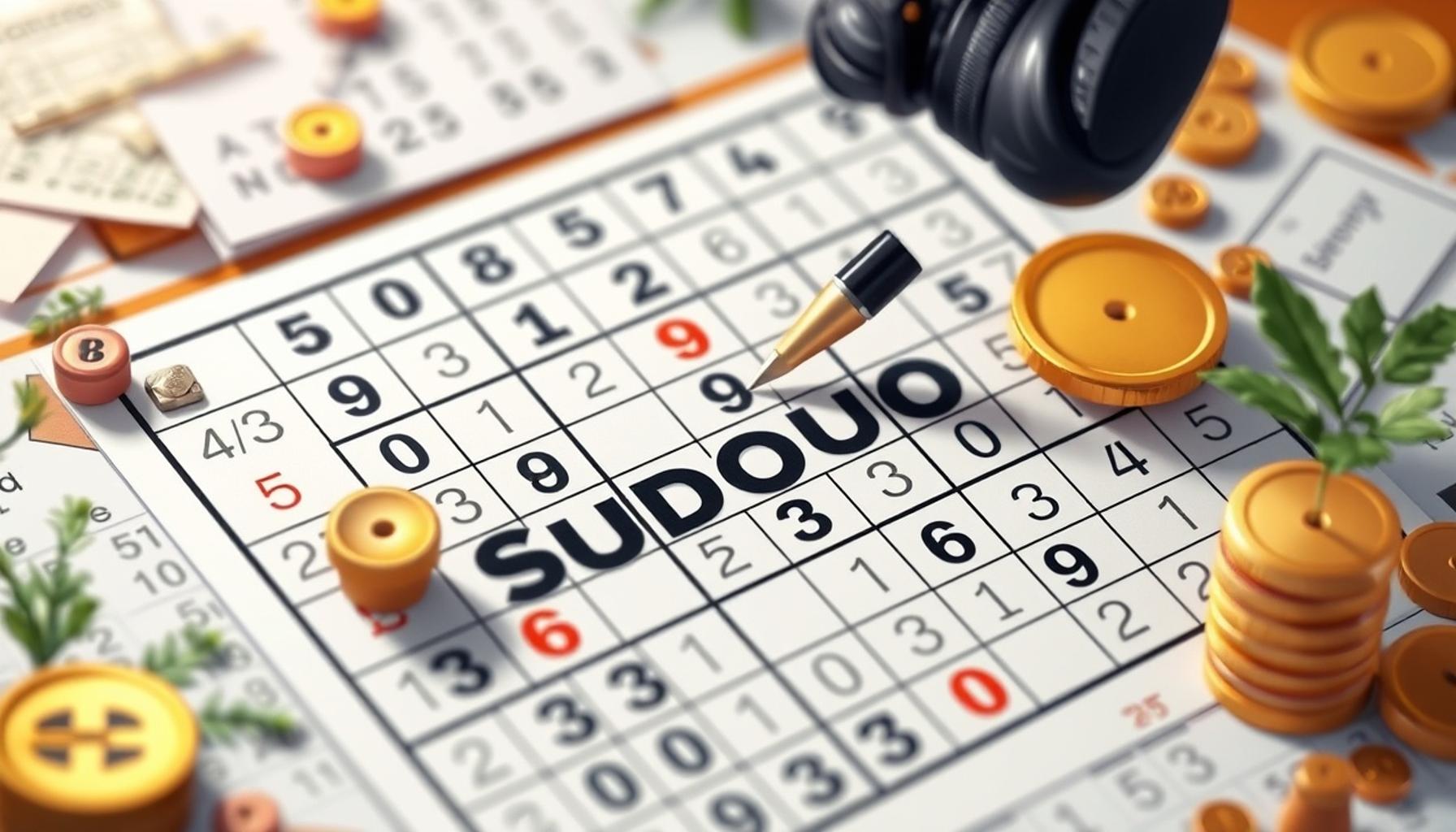
The Fascinating World of Sudoku
Sudoku stands as a unique intersection of entertainment and mental exercise. This puzzle, which has taken the hearts and minds of enthusiasts by storm across the United States, invites players of all ages to engage in a fun activity that not only captivates their attention but also serves as a powerful tool for cognitive development. Champions of Sudoku often laud it for its ability to enhance memory, elevate concentration, and refine problem-solving skills through its unique gameplay dynamics.
The core appeal of Sudoku rests in its uncomplicated rules that belie an intricate level of challenge. Players must fill a 9×9 grid with numbers such that each row, column, and 3×3 subgrid contains the digits from 1 to 9 exactly once. This foundational simplicity is what transforms Sudoku into a profound intellectual endeavor. Let’s explore some key benefits of engaging with this classic puzzle:
- Cognitive Enhancement: The game activates various regions of the brain, improving analytical thinking capabilities. Research has shown that activities like Sudoku stimulate neural pathways, enhancing overall brain function.
- Stress Relief: In a fast-paced world, Sudoku provides a soothing retreat. Engaging in this activity can lead to a state of flow—a mental state characterized by focused attention and intrinsic enjoyment—allowing players to momentarily disconnect from daily stresses while still engaging their minds.
- Social Interaction: With the rise of Sudoku clubs and online communities, players can engage with others, sharing strategies, discussing challenging puzzles, and even participating in friendly competitions. This social aspect fosters connections among diverse individuals united by a common interest.
Aside from these benefits, mastering Sudoku often entails a nuanced understanding of several mental strategies that can significantly improve gameplay. These strategies include:
- Pattern Recognition: Experienced players develop the ability to recognize recurring patterns within the grid, which enhances their predictive capacity when placing numbers.
- Process of Elimination: By narrowing down possible placements for each number, players can effectively clarify their options. This methodical approach can be likened to setting up a hypothesis in scientific research, where each move is a step toward solving the larger puzzle.
- Logical Deduction: This higher-level thinking skill allows players to consider multiple possibilities and potential outcomes, simulating strategic decision-making often needed in real-life situations.
No matter if you are an experienced Sudoku aficionado or a budding newcomer, mastering these strategies can markedly elevate your gameplay. As you immerse yourself in the captivating realm of Sudoku, you will uncover that it is not merely about placing numbers on a grid; it is a gateway to enhancing your cognitive agility and fortifying mental resilience, ensuring your mind remains sharp and engaged.
DIVE DEEPER: Click here to discover how memory games can enhance your social connections and cognitive abilities
Understanding Mental Strategies in Sudoku
The journey toward mastering Sudoku involves more than just number placement; it requires the cultivation of specific mental strategies that enhance cognitive agility. These strategies not only aid in solving puzzles but also stimulate the brain, keeping it agile and responsive. By applying these techniques, players not only enjoy the thrill of the game but also train their minds to tackle complex problems more effectively in everyday life.
One of the primary strategies employed by seasoned Sudoku players is pattern recognition. This skill entails identifying recurring sequences and configurations within the grid. For example, as seasoned players progress through various levels of difficulty, they begin to notice how certain numbers frequently appear in similar layouts. This intuition becomes a powerful tool, enabling them to predict and anticipate the placement of numbers more efficiently. Consequently, pattern recognition can significantly enhance one’s ability to solve puzzles swiftly while simultaneously training the brain to identify patterns in other areas, such as data analysis or problem-solving.
In tandem with pattern recognition, the process of elimination stands as another crucial mental tactic. This strategy is akin to a detective piecing together clues to complete a mysterious narrative. Players systematically assess each row, column, and subgrid, eliminating options that cannot logically fit. For instance, if a particular number can only occupy a single cell after considering existing numbers in its vicinity, players can confidently place it, thereby unraveling the puzzle piece by piece. This method not only fosters critical thinking skills but can have beneficial applications in decision-making processes and prioritizing tasks in work or personal projects.
Moreover, employing logical deduction allows players to engage in higher-level reasoning. This strategy requires examining potential placements and mapping out consequences, similar to creating a flowchart of decisions. For example, if placing a number in a certain position leads to a conflict with another number later, players learn to reconsider their options. This type of mental exercise sharpens strategic thinking and prepares individuals for scenarios where multiple outcomes need to be evaluated, an essential skill in both professional and personal contexts.
Ultimately, these foundational strategies offer more than just methods to succeed in Sudoku. They create a framework for developing cognitive skills that are transferable to various life situations. Whether it be in the workplace, in academic pursuits, or daily problem-solving, the skills honed through these puzzles can help sharpen focus and enhance overall cognitive function. As players dive deeper into the world of Sudoku, they will discover a rewarding synergy between enjoyment and intellectual growth, leading not only to improved puzzle-solving abilities but also to lifelong mental resilience.
| Category | Details |
|---|---|
| Cognitive Skills | Sudoku enhances logical reasoning and problem-solving abilities, fundamentally improving intellectual engagement. |
| Stress Relief | Playing Sudoku provides a mental break, allowing players to focus their thoughts and relieve anxiety in a constructive manner. |
Engaging with Sudoku puzzles is not merely a pastime; it serves as a pathway to enhancing cognitive agility. Through the systematic approach required by Sudoku, players cultivate their cognitive skills, particularly in areas like logical reasoning and strategic thinking. Each puzzle presents a unique challenge, demanding critical thought and a methodical strategy to unveil the solution. This consistent practice sharpens the mind, making it quicker and more adept at tackling complex problems both in and out of the game.Moreover, Sudoku offers stress relief amid our busy lives. Immersing oneself in the numbers not only diverts attention away from daily pressures but also promotes a calming effect by infusing focus and discipline. Such mental engagement can lead to a more relaxed state of mind, effectively combating anxiety and providing a much-needed sanctuary. This dual benefit of sharpening intellect while soothing the psyche showcases Sudoku’s multifaceted appeal. Engaging with it can ultimately lead to a more agile mind, capable of navigating life’s challenges with greater ease.
DIVE DEEPER: Click here to discover the evolution of mind games
Advanced Techniques for Enhanced Problem Solving
As players become more familiar with the intricacies of Sudoku, they often seek to refine their skills further by embracing advanced strategies that can drastically improve their cognitive performance. Two particularly noteworthy tactics within this realm include candidate elimination and forcing techniques, both of which require heightened levels of logical reasoning and foresight.
Candidate elimination involves narrowing down potential placements of numbers in a cell based on existing ones in the same row, column, and subgrid. Where novice players may fill in possibilities, seasoned participants focus on supporting their deductions with strong justification. By writing down all possible candidates for a cell and systematically ruling them out, players can streamline their thought processes and make more confident decisions. For example, if the only valid candidate for a certain cell is the digit ‘5’, recognizing that ‘5’ suits the surrounding numbers establishes a critical foundation. This heightened awareness not only fosters improved performance in Sudoku but also nurtures skills applicable in analytical roles, such as those found in data science or finance, where candidates—be they numbers or potential decisions—must be methodically evaluated and eliminated.
Forcing techniques, on the other hand, introduce a more profound level of complexity. This strategy requires players to assume the placement of a number temporarily to test potential outcomes, akin to running a hypothetical scenario. If placing a ‘3’ in a specific cell leads to a contradiction elsewhere in the puzzle, it becomes clear that the assumption was incorrect, guiding players towards alternate placements. The process not only enhances puzzle-solving capabilities but also sharpens reasoning skills, which are essential in many high-pressure situations, including business negotiations or project management tasks. The ability to anticipate the consequences of decisions is invaluable, enabling more informed and strategic thinking.
Furthermore, implementing grouping techniques can drastically raise one’s Sudoku proficiency. This method encourages players to identify clusters of numbers that restrict possibilities for specific cells. By focusing on these clusters, players can reveal connections they might have otherwise overlooked. For instance, if several ‘6’s are present in a limited region of the board, it restricts the potential placements of other numbers in proximity. This method emphasizes spatial awareness and organizational skills, qualities cultivated through the repetitive engagement with puzzles that create cognitive frameworks critical in spatial reasoning and architecture, for example.
A compelling aspect of these advanced strategies is their capacity to cross-pollinate with various aspects of life outside of Sudoku. Players frequently report enhanced memory retention and problem-solving speed in other disciplines, ranging from mathematical equations to strategic game play in competitive sports. This phenomenon aligns with neurological studies that suggest activities requiring deep cognitive engagement—like Sudoku—can lead to neuroplasticity, a process by which the brain rewires itself to handle complex tasks more efficiently over time.
In summary, exploring advanced techniques not only expands players’ Sudoku arsenal but also fortifies their ability to navigate daily challenges with agility and precision. Ultimately, the application of these tailored strategies is a crucial step in the journey toward sustained cognitive resilience and growth.
DISCOVER MORE: Click here to learn about the benefits of memory games
Conclusion: Navigating the Paths of Cognitive Agility Through Sudoku
In the world of puzzling, Sudoku stands out not just as a game, but as an engaging tool that fosters cognitive agility and mental resilience. Throughout this exploration, we have uncovered a suite of strategies that enhance problem-solving capabilities, including foundational methods like candidate elimination and sophisticated approaches such as forcing techniques. These strategies do more than simply solve puzzles; they challenge us to think critically and creatively, sharpening our analytical skills while encouraging a methodical approach to complex issues.
The beauty of Sudoku lies in its cross-disciplinary benefits, which extend far beyond the realms of mathematics and logic. Players find that the enhanced concentration, memory retention, and spatial awareness cultivated through consistent gameplay translate seamlessly into everyday scenarios—be it in the boardroom, classroom, or personal life. This intricate relationship underscores the notion that engaging with mentally demanding tasks contributes to neuroplasticity, allowing our brains to adapt and thrive amidst challenges.
Ultimately, embracing Sudoku as a tool for cognitive enhancement invites us to redefine our limits. By continuously refining our puzzle-solving techniques, we cultivate not only an improved understanding of numbers but also a stronger ability to navigate the complexities of life. As we unravel the layers of Sudoku, we equip ourselves with skills that empower informed decision-making and elevate our cognitive agility, ensuring we approach daily challenges with newfound confidence. So, why not dive into a Sudoku puzzle today and embark on a journey toward sharper thinking?
Related posts:
Unraveling the Game of Go: Long-Term Thinking Strategies and Move Anticipation
Strategic Reasoning in Simulation Games: Learning from Virtual Scenarios
Competitive Card Games: How Strategic Thinking Can Define Winners
Developing Problem-Solving Skills Through Mathematical Puzzles
Logical Puzzles: How Solving Challenges Stimulates the Strategic Mind
The Influence of Video Games on the Improvement of Strategic Thinking

Linda Carter is a writer and puzzle expert specializing in mind games, brain teasers, and cognitive challenges. With extensive experience helping individuals enhance their problem-solving skills and think critically, Linda shares her knowledge on our platform. Her goal is to empower readers with practical advice, engaging puzzles, and strategies to sharpen their minds and achieve success in the captivating world of mind games and puzzles.