
Developing Problem-Solving Skills Through Mathematical Puzzles

Unlocking the Power of Puzzles
Every day, we encounter challenges that require a keen analytical mind. One engaging method to sharpen this skill is through mathematical puzzles. These puzzles not only offer a fun diversion but also enhance critical thinking and problem-solving abilities. They come in numerous forms, including logic riddles, number games, and brain teasers, each designed to test the limits of our intellect.
Engaging in mathematical puzzles can foster a range of cognitive benefits, including:
- Enhanced Analytical Thinking: Puzzles challenge your ability to dissect and understand problems. Solving a complex puzzle often involves breaking it down into smaller, manageable parts and recognizing underlying patterns, which is a crucial skill in everyday decision-making.
- Improved Logical Reasoning: Many puzzles require logical deductions that contribute to better reasoning skills. For instance, a classic puzzle like the knight and knaves puzzle forces players to analyze statements and reason through contradictions, honing their ability to reach logical conclusions.
- Increased Persistence: Overcoming a difficult puzzle builds patience and determination. The sense of achievement felt upon solving a particularly challenging puzzle can inspire resilience in the face of obstacles in other areas of life.
In classrooms across the United States, educators are increasingly incorporating puzzles into their curricula to make learning more interactive and enjoyable. These activities provide students with the opportunity to:
- Collaborate and share strategies, which not only develops teamwork skills but also exposes them to diverse methods of problem-solving.
- Apply mathematical concepts in diverse scenarios, reinforcing their understanding of subjects such as algebra, geometry, and statistics through practical applications.
- Experience the satisfaction of problem resolution, which can enhance their confidence and encourage a lifelong appreciation for mathematics.
Various types of mathematical puzzles await discovery, each tailored to challenge different aspects of our thinking. For example, Sudoku puzzles enhance numerical reasoning and strategic planning, while Kakuro puzzles, often referred to as cross-sum puzzles, encourage players to think about number combinations and arithmetic operations in innovative ways. Whether you are looking for a solo challenge or a group activity, there’s a puzzle waiting for you to solve!
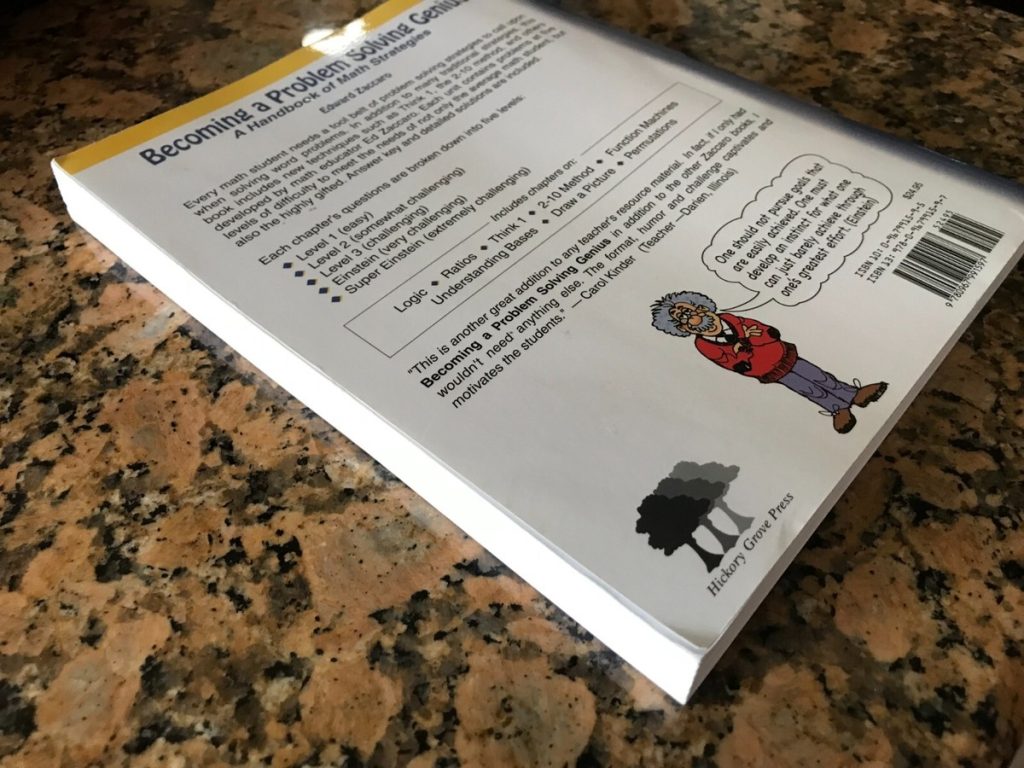
Puzzles not only entertain but also serve as valuable tools for mental exercise. They are accessible, often requiring nothing but pencil and paper, making them a perfect pastime for all age groups. Whether in a classroom setting or at home, integrating math puzzles into daily routines can lead to a more profound understanding of mathematical concepts and greater enjoyment in learning. Taking the time to engage with these challenges is an investment in cognitive flexibility and critical thinking skills that pay dividends throughout life.
DIVE DEEPER: Click here to unravel more
Engaging the Mind: The Importance of Mathematical Puzzles
Mathematical puzzles are more than just a source of entertainment; they are potent educational tools designed to bolster problem-solving skills. By engaging with these challenges, individuals can cultivate a mindset that thrives on logical reasoning, creativity, and resilience. The cognitive engagement required by these puzzles helps sharpen the mind, turning abstract mathematical concepts into tangible experiences.
Through persistent practice with puzzles, one can experience tangible improvements across several cognitive domains. Here are some key areas where mathematical puzzles have demonstrated substantial benefits:
- Critical Thinking: Many mathematical puzzles require players to think several steps ahead, anticipating outcomes and consequences. For instance, solving entangled logic puzzles necessitates a thorough examination of the rules and a systematic approach to find the correct resolution. This kind of critical engagement fosters deeper cognitive connections that are applicable in real-world problem-solving scenarios.
- Creativity: Far from being purely analytical, mathematics is a field ripe with opportunities for creative expression. Problems like formation puzzles or geometric challenges encourage lateral thinking, pushing solvers to consider multiple perspectives and innovative solutions. For example, the classic problem of fitting various shapes into a defined space, also known as tiling puzzles, ignites creativity and spatial awareness.
- Adaptive Reasoning: As one encounters different types of puzzles, they learn to adapt their strategies. For example, switching from algebra-based puzzles to those involving probabilities enables a flexible approach to problem-solving. This adaptive reasoning is crucial for success in academic settings and beyond.
- Social Interaction: Collaborative puzzle-solving can lead to valuable discussions and the exchange of ideas. Group activities, such as competitive puzzle challenges, not only foster teamwork but also introduce diverse methods of thinking. Exposure to multiple problem-solving strategies enhances teamwork and communication skills.
Consider the upward trend of escape rooms that utilize mathematical puzzles as a part of their challenges. These interactive experiences richly illustrate how engaging with math through puzzles can become an exhilarating social activity. Participants must utilize teamwork and sharp problem-solving skills to decipher clues and progress, embodying an exciting marriage between learning and leisure.
Furthermore, the rise of educational apps and platforms that present mathematical puzzles indicates a growing recognition of their value. Programs such as Mathnasium and Khan Academy incorporate gamified elements into their teaching methods, harnessing the power of puzzles to build a stronger foundation in mathematics for learners of all ages. These platforms not only promote mathematical proficiency but also encourage students to approach math with enthusiasm and curiosity.
The multifaceted benefits accrued from engaging with mathematical puzzles serve as a compelling argument for incorporating them into everyday life. Whether through standalone activities in the classroom, friendly competitions among peers, or interactive digital platforms, the quest to solve these challenges paves the way for acquiring vital skills that extend far beyond mathematics. Embracing the intricate world of puzzles not only serves as a captivating intellectual pursuit but also strengthens the vital problem-solving skills essential in today’s complex landscape.
Unlocking Potential with Mathematical Puzzles
In the age of rapidly evolving technology, the importance of problem-solving skills cannot be overstated. Engaging with mathematical puzzles not only enhances critical thinking but also prepares individuals for real-world challenges. These activities come alive through inviting formats like brain teasers, logic puzzles, and numerical challenges. They serve as the groundwork for developing analytical skills that extend beyond the classroom.
Exploring the world of mathematical puzzles is akin to embarking on a treasure hunt. Each challenge offers a new opportunity to sharpen one’s cognitive abilities. As learners delve deeper into the puzzle-solving process, they cultivate a mindset equipped to tackle complex scenarios. This journey fosters resilience, as overcoming obstacles in a puzzle mirrors navigating challenges in daily life.
| Category | Benefits |
|---|---|
| Cognitive Skills | Enhanced ability to analyze and interpret information. |
| Creativity | Encourages out-of-the-box thinking and innovative solutions. |
| Persistence | Fosters determination to find solutions despite challenges. |
Mathematical puzzles encourage a spirit of inquiry and exploration, empowering individuals to view problems from multiple angles. Each puzzle completed is a testament to the power of patience and intellectual curiosity. From young learners to seasoned adults, there is a puzzle out there waiting to ignite curiosity and hone skills essential for success in various fields.
DIVE DEEPER: Click here to discover more
Nurturing Problem-Solving Abilities: The Role of Puzzles in Education
The incorporation of mathematical puzzles within education has garnered significant attention for its impact on developing vital problem-solving abilities. Schools across the United States are increasingly recognizing that traditional teaching methods often do not engage students effectively. Utilizing puzzles leverages the engaging nature of games, providing a context where students can explore, experiment, and find joy in solving complex problems.
One notable example is the use of Sudoku in classrooms. This number-placement puzzle not only reinforces logic and organization skills but also helps students improve their deductive reasoning. By breaking the problem down into smaller parts, students learn to identify patterns and contradictions—essential skills in both mathematics and real-life situations. Educators report that students who regularly engage with Sudoku show enhanced attention to detail and improved analytical skills.
Beyond traditional settings, various contests and challenges emphasize the importance of mathematical puzzles in a competitive format. Events like the American Mathematics Competitions (AMC) challenge students to tackle rigorous problems that require a mix of creativity and logical reasoning. These tournaments serve as a platform for students to apply their problem-solving skills under pressure, fostering resilience and adaptability—traits highly valued not just in academics, but in any future career.
Online platforms have emerged as beneficial resources where students can engage with mathematical puzzles at their own pace. Websites such as Brilliant.org and Art of Problem Solving provide a plethora of interactive puzzles and challenges that cater to various skill levels. This digital approach allows learners to explore mathematical concepts in-depth, making the learning process personalized and flexible. Research indicates that students who utilize these resources often exhibit heightened levels of motivation and self-regulated learning skills, key attributes for success in any intellectual pursuit.
The influence of mathematical puzzles extends beyond individual development; they also facilitate community building and social interaction. Math clubs in schools or local community centers often host puzzle-solving events that promote collaboration and teamwork. This social aspect encourages students to communicate their thought processes, leading to a greater understanding of diverse problem-solving strategies. Additionally, the joy of tackling tough puzzles collectively can build camaraderie and a shared sense of achievement.
Moreover, the neuroeducational community increasingly recognizes the benefits of engaging with mathematical puzzles as a way to stimulate brain activity. Studies reveal that puzzle-solving activates multiple areas of the brain, enhancing cognitive functions such as memory retention and processing speed. By regularly challenging oneself with mathematical puzzles, individuals can nurture neuroplasticity, allowing their brains to develop new pathways for information and problem-solving.
As we further explore the intersection of puzzles and education, it becomes increasingly clear that enhancing problem-solving skills through mathematical puzzles is not merely an innovative teaching tactic; it is a fundamental shift in how we approach learning in an ever-evolving world. The capacity to confront challenges with creativity, critical thinking, and adaptability is paramount, and fostering these traits early through engaging mathematical puzzles could profoundly shape future generations’ success.
DIVE DEEPER: Click here to enhance your skills
Unlocking Potential Through Mathematical Engagement
In conclusion, the journey of developing problem-solving skills through mathematical puzzles is not just an educational trend, but a transformative approach to learning. As educational systems in the United States increasingly gravitate towards incorporating interactive and engaging methods, it becomes evident that puzzles play a crucial role in shaping how students approach challenges. By fostering critical thinking, encouraging teamwork, and promoting resilience, these puzzles serve as powerful tools for growth.
Moreover, the ability to analyze and solve complex problems is increasingly vital in today’s fast-paced world, where adaptability and innovation often dictate success. The diverse range of puzzles—from classic Sudoku to competitive mathematics challenges—cultivates an environment that not only nurtures cognitive skills but also builds a community of learners eager to tackle obstacles together.
As educators and parents recognize the importance of this dynamic form of learning, they can harness the potential of online platforms and community initiatives to further engage students. The shift towards integrating mathematical puzzles into regular curricula signifies a commitment to not just teaching mathematics, but empowering young minds with the tools needed for future success. It is an invitation to embrace learning as an exciting adventure, where challenges are met with creativity, persistence, and a collaborative spirit.
Ultimately, the benefits of developing problem-solving skills through mathematical puzzles extend far beyond the classroom. They equip students with essential life skills, preparing them for whatever challenges may lie ahead. Invest in puzzles today, and you are investing in the solutions of tomorrow.
Related posts:
Strategic Reasoning in Simulation Games: Learning from Virtual Scenarios
The Art of Chess: Developing Strategic Thinking Through Ancient Strategies
The Influence of Video Games on the Improvement of Strategic Thinking
Escape Rooms: How Group Challenges Foster Strategic Thinking and Collaboration
Unraveling the Game of Go: Long-Term Thinking Strategies and Move Anticipation
Logical Puzzles: How Solving Challenges Stimulates the Strategic Mind

Linda Carter is a writer and puzzle expert specializing in mind games, brain teasers, and cognitive challenges. With extensive experience helping individuals enhance their problem-solving skills and think critically, Linda shares her knowledge on our platform. Her goal is to empower readers with practical advice, engaging puzzles, and strategies to sharpen their minds and achieve success in the captivating world of mind games and puzzles.