Brain Teasers and Neuroscience: What Happens in Our Brain During Problem Solving
Unlocking the Brain’s Mysteries
Every time you engage in a brain teaser, an intricate dance of neurons begins in your brain. This mental gymnastics not only hones your problem-solving skills but also reveals fascinating insights into neuroscience. From crossword puzzles to logical riddles, these challenges hold more than just entertainment value; they provide a window into our cognitive processes. Engaging in these puzzles can spark creativity and inspire innovative thinking, essential traits in both personal and professional spheres.
The Science Behind Problem Solving
When faced with a challenge, several areas of the brain spring into action, showcasing a coordinated effort essential for effective problem-solving. For instance:
- Prefrontal Cortex: This area of the brain is crucial for executing higher-order functions, including reasoning and decision-making. It’s where critical thinking occurs, enabling you to weigh options and anticipate outcomes during challenging tasks.
- Parietal Lobes: Involved in processing sensory information, the parietal lobes assist in spatial awareness and mental manipulation of objects and scenarios. This ability is particularly useful when solving puzzles that require visualizing spatial relationships.
- Hippocampus: Often associated with memory, the hippocampus helps recall past experiences related to problem-solving. This region allows you to draw upon relevant knowledge and strategies gained from previous challenges.
These regions work together, showcasing the brain’s remarkable ability to adapt and strategize. For example, a study involving college students showed that those who regularly engaged with brain teasers performed better in academic testing, suggesting that consistent practice can enhance cognitive flexibility. Understanding the complex interaction of these areas can provide deeper insights into not just how we think, but also how we can improve our cognitive skills.
The Role of Brain Teasers
Engaging in brain teasers can yield numerous cognitive benefits, making them an intriguing endeavor. For instance:
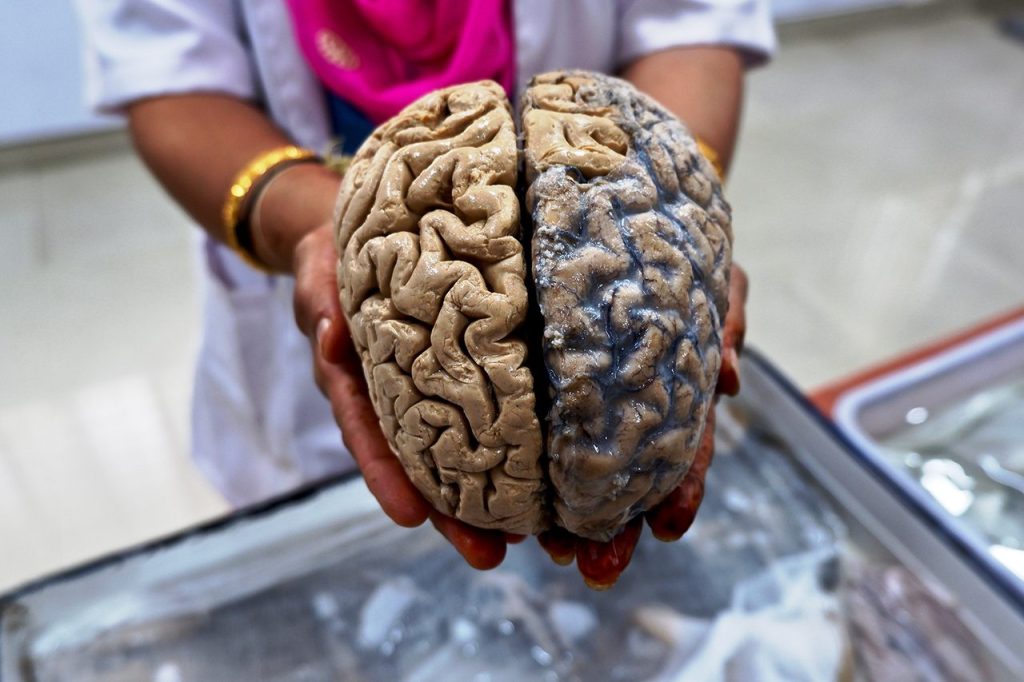
- Enhance mental agility: Regularly solving brain teasers stretches your cognitive faculties, allowing for quicker reasoning and more effective problem-solving abilities.
- Promote neuroplasticity: This is the brain’s remarkable capability to form and reorganize synaptic connections. Brain teasers stimulate this adaptability, making it possible for the brain to recover from injury and adapt to new learning.
- Boost memory retention and recall: The mental exercise required by puzzles enhances the processes of encoding and retrieval, helping to fortify long-term memory.
As we delve deeper into the relationship between brain teasers and neuroscience, we uncover critical pathways that influence our ability to solve problems and engage with challenges. For instance, studies have shown that older adults who frequently engage in mentally stimulating activities, including puzzles, have a significantly lower risk of cognitive decline. So, what secrets does your brain hold during these moments of inquiry and deduction? The more we explore the interconnection between brain teasers and neural activity, the more we realize their potential to unlock new dimensions in our cognitive journeys.
DISCOVER MORE: Click here to learn how mind games can boost communication
The Intricate Mechanics of the Brain’s Problem-Solving Engine
When engaging with brain teasers, your brain embarks on a remarkable journey where a symphony of neural pathways is orchestrated to tackle complex problems. Recent advancements in neuroscience have illuminated the underlying mechanisms involved in problem-solving activities. Each riddle, puzzle, or challenge you encounter serves as a workout for your mental faculties, stimulating various brain regions that contribute to enhanced cognitive performance.
Areas of the Brain Activated During Problem-Solving
Your brain isn’t a uniform entity; it comprises specialized regions that work in tandem whenever you face a challenge. Here’s a closer look at the specific areas activated during this intricate process:
- Anterior Cingulate Cortex (ACC): This region plays a pivotal role in regulating attention and managing the mental effort required to solve problems. It evaluates conflicting information and assigns cognitive resources, helping prioritize solutions effectively.
- Temporal Lobes: These lobes are essential for the processing of contextual information and retrieving facts and associations. When solving brain teasers, the temporal lobes enable you to access stored knowledge and recognize patterns.
- Basal Ganglia: Known for its role in the coordination of movement, the basal ganglia are also vital in facilitating decision-making processes. It helps filter and refine potential solutions, ensuring the most suitable approaches are put forward.
Studies indicate that problem-solving engages the brain’s default mode network as well; a network often activated during rest or daydreaming. This may seem contradictory, but the mind’s wandering can lead to profound insights and innovative solutions. Researchers have found that allowing your mind to wander can sometimes enhance problem-solving capabilities, a phenomenon that illustrates the complexity of cognitive processes.
Cognitive Benefits of Engaging with Brain Teasers
The benefits of regularly tackling brain teasers extend far beyond simple enjoyment. Engaging in these intellectual exercises can foster numerous cognitive advantages, including:
- Improved Analytical Skills: Through repeated exposure to complex challenges, your analytical reasoning skills sharpen, preparing you for real-life problem-solving scenarios.
- Enhanced Creativity: Many brain teasers demand lateral thinking and unconventional approaches. This kind of engagement can foster an innovative mindset, making it easier to devise unique solutions in various contexts.
- Increased Focus: Brain teasers require sustained attention. By consistently practicing these exercises, you can improve your ability to concentrate, a skill that proves invaluable in both academic and professional settings.
As we delve deeper into the interconnectedness of brain teasers and our cognitive engines, an intriguing narrative unfolds about the brain’s remarkable adaptability. Exploring the intricate workings of our minds not only reveals how we solve problems but also opens doors to enhancing our overall cognitive health. With a better understanding of these processes, can we leverage brain teasers to enrich our daily lives and bolster our problem-solving prowess?
| Cognitive Benefits | Brain Function Insights |
|---|---|
| Enhanced Problem-Solving Skills | Engaging with brain teasers stimulates neural pathways, improving analytical thinking. |
| Increased Neuroplasticity | Challenges like puzzles promote neuroplasticity, allowing the brain to adapt and reorganize itself. |
| Boosted Memory Retrieval | Solving problems requires recalling information, thus enhancing long-term memory. |
| Stress Reduction | Focusing on brain teasers can serve as a mindful distraction, reducing stress levels while promoting cognitive activity. |
Delving into the neuroscience of problem solving reveals how our brain processes challenges. The act of tackling a brain teaser not only activates our prefrontal cortex, the decision-making hub, but also triggers other areas involved in memory and emotion. This interplay enhances not only our cognitive skills but also emotional regulation. Intriguingly, using brain teasers can lead to efficient recruitment of various brain networks, paving the way for creative problem-solving. Engaging in these mental exercises offers both immediate and long-term cognitive benefits, including heightened alertness and better emotional resilience. The brain’s dynamic response to problem-solving creates a fascinating area of study within neuroscience, reflecting the intricate link between mental challenges and cognitive enhancement. Exploring this connection further could provide new insights into effective learning and mental health strategies.
DIVE DEEPER: Click here to discover more about cultural influences on puzzles
Neuroplasticity: The Brain’s Capacity for Change
As we engage with brain teasers, it’s essential to recognize the concept of neuroplasticity, which refers to the brain’s ability to reorganize itself by forming new neural connections throughout life. This remarkable feature is especially relevant when discussing problem-solving, as it highlights how regularly challenging our minds can physically alter brain architecture.
The Role of Practice in Neural Development
Research has shown that repetitive engagement with puzzles sharpens synaptic connections within specific regions of the brain. For instance, a study published in the journal Neuropsychology revealed that individuals who consistently practiced complex problem-solving exercises experienced measurable increases in gray matter density in areas associated with memory and cognitive flexibility. These physical changes not only enhance performance in solving increasingly challenging brain teasers but also significantly improve real-world decision-making abilities.
- Hippocampus: Critical for learning and memory, the hippocampus is often stimulated by activities requiring the retrieval of knowledge or the formation of new strategies. Enhanced neuroplasticity in this area can foster a deeper understanding of complex concepts and improve long-term retention.
- Prefrontal Cortex: This part of the brain is vital for higher-order functions, including planning, reasoning, and problem-solving. Engaging in frequent brain teasers can bolster its activity, making it more adept at tackling abstract challenges.
A tangible example of neuroplasticity at work comes from a study highlighting musicians’ brains, which show distinct structural changes when compared to non-musicians. Research in Nature Neuroscience found that musicians possess more robust connections in the areas of the brain associated with auditory processing and spatial coordination. Similarly, regular engagement with brain teasers can foster growth in cognitive faculties, mirroring the changes observed in musicians.
Challenges as Catalysts for Cognitive Growth
Another fascinating aspect of diving into brain teasers lies in the concept of cognitive dissonance, which occurs when we face a challenge that contradicts our existing beliefs or knowledge. This state of mental conflict can promote deeper cognitive engagement, pushing us not only to resolve the dissonance but to expand our understanding as well. Embracing challenging brain teasers can create the perfect storm for cognitive expansion by encouraging us to reassess our methodologies and develop more innovative approaches.
Furthermore, studies indicate that the emotion of frustration often experienced while solving brain teasers can stimulate the dorsolateral prefrontal cortex, a site associated with problem-solving and strategic thinking. Thus, experiencing and overcoming challenges not only enhances our skills but also builds resilience, enabling us to tackle increasingly complex problems in everyday life.
In this sense, brain teasers can be seen as a form of mental exercise, akin to weightlifting for the mind. They push our limits, spark neuroplastic changes, and ultimately empower us to navigate the intricate network of problems we encounter, both trivial and significant, throughout our lives. The connection between engaging with challenging puzzles and cognitive growth is beautifully illustrated in this dynamic interplay.
DIVE DEEPER: Click here to discover more
Conclusion: Unlocking Cognitive Potential Through Brain Teasers
In summary, the intricate relationship between brain teasers and neuroscience offers profound insights into how our minds function during problem-solving. As we engage in challenging puzzles, we stimulate crucial brain regions like the prefrontal cortex and hippocampus, fostering increased neuroplasticity and enhancing cognitive flexibility. This evolutionary ability of the brain to physically adapt and organize itself forms the backbone of our learning experience, revealing that every problem we tackle is an opportunity for growth.
The concept of cognitive dissonance, exemplified through our emotional responses, particularly frustration, further uncovers the mechanisms behind cognitive engagement. Each time we face a brain teaser, we not only test our knowledge but also expand it, reshaping our mental frameworks and resilience. This transformative process not only enhances our capacity to solve puzzles but significantly betters our ability to navigate real-world challenges.
As our understanding of brain teasers and their implications continues to evolve, it becomes clear that cultivating a habit of solving these intricate problems can lead to lasting improvements in our cognitive health. Engaging with puzzles is more than just a recreational activity; it is a potent exercise for our minds, building a stronger, more adaptive brain. Thus, embracing brain teasers in our daily lives paves the way for cognitive enrichment, enabling us to attain a sharper, more agile intellect ready to tackle the complexities of the world. Now is the perfect time to infuse this enlightening practice into your routine—your brain’s potential awaits.
Related posts:
The History of Brain Teasers: From Ancient Riddles to Modern Challenges
How Brain Teasers Can Improve Your Memory and Cognitive Skills
Brain Teasers and Creativity: How Mental Challenges Stimulate Innovative Thinking
The Importance of Brain Teasers in Stress Reduction and Increased Concentration
Brain Teasers and Education: How to Use Them to Stimulate Learning in Children
The Psychology of Brain Teasers: Why Do We Love Mental Challenges?

Linda Carter is a writer and puzzle expert specializing in mind games, brain teasers, and cognitive challenges. With extensive experience helping individuals enhance their problem-solving skills and think critically, Linda shares her knowledge on our platform. Her goal is to empower readers with practical advice, engaging puzzles, and strategies to sharpen their minds and achieve success in the captivating world of mind games and puzzles.